Bruce Stainsby's Blog: Muttering from the mo

Globalisation.

February 13th, 2012

I will be away for the next twelve months, living and traveling in countries that don’t have English as a first language.

Also countries that have very different cultural and commercial values to what I have been used to.

Firstly North Africa, Jordan and Turkey, then the Balkans, Eastern Europe and finally into Western Europe.

Well that’s the plan.

This will be a challenge for my blog as I usually write about communication.

And, as I believe that most good communication involves both visual imagery and the written word, I think that I will be dealing with half a deck of cards.

It will be interesting to see if the contemporary approach to advertising, of more visual than verbal solutions, has really become global.

Will I just gravitate to visual solutions, because language will no longer play a part, or will there be genuinely good work that transcend language?
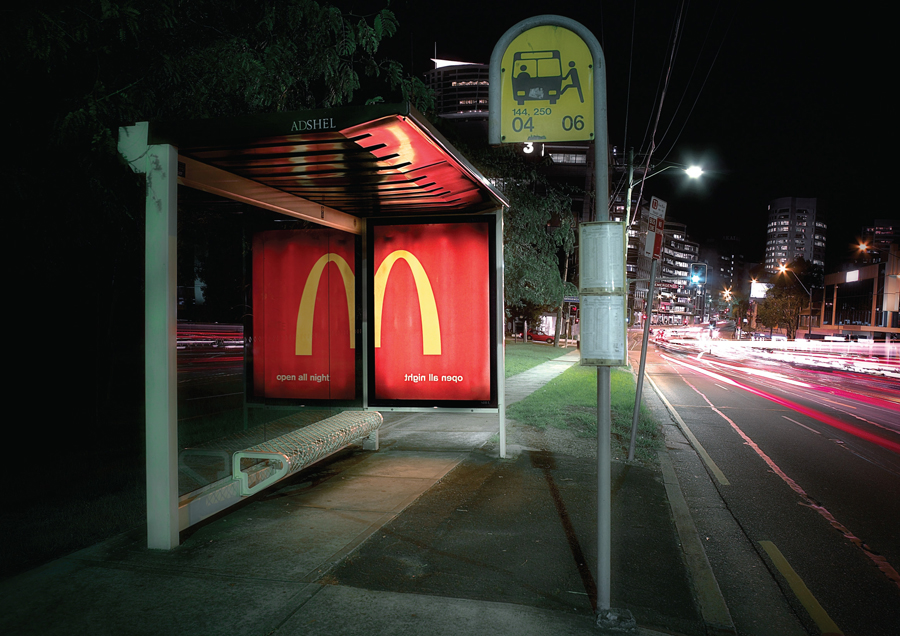

Brands, as well as products, have a shelf life.

February 6th, 2012

Brands began to grow and become national and then international in the early part of the last century.

They then went through a growth spurt after the Second World War. This was especially evident during the Creative Revolution of the 1950s’ and 60s’.

Agencies like Ogilvy and Mather worked with their clients to expand into new areas by creating unique campaigns designed to tap into the different cultures.

Then, in order to reduce costs, marketers sanitized the advertising so it all looked the same and called it ‘Globalization’.

Now many of these brands are now suffering from Brand Decline, where their commercial and social viability is being questioned.

Communication has been revolutionised and the brand paradigm is being challenged. Social Media and online shopping are changing the way consumers consume. Even consumerism is being challenged, as a new generation find that they either can’t afford to purchase or don’t really want to.

In Australia the dream of owning a house on a quarter acre block is just not possible for many the current generation. The shift will be into high density living, much like 99% of the rest of the world.

This will have a knock on effect to many branded goods.

When you live in an apartment you don’t have a garden and don’t need half the products that Bunnings and other large hardware stores flog.

The demise of the Detroit motor industry came about because the marketers and manufacturers didn’t see the small four cylinder Japanese cars coming. That was until they knocked their big gas guzzlers off the motor show podiums.

The same thing has happened here as the Mazda 3 takes over as being Australia’s largest selling single vehicle. A position held by locally manufactured vehicles for over 100 years.

Long-standing branded goods are disappearing from supermarket shelves at an alarming rate. Fueled by a desire to give the consumer lower prices and make larger profits, the supermarkets are filling the shelves with Home Brand goods.

The brands that survive won’t do so by cutting prices or engaging in a retail war with their competitors. They will only continue if they remain relevant to the consumer.

Loma Linda in California, a town with the world’s best life expectancy, has no bottle shop and no McDonalds. Now this is an extreme situation but it’s not beyond possibility that it could be part of a growing trend.

If proposed new plain packaging laws pass the in the Australian parliament, cigarette brands as we know them, will be history.

Long standing brands like Marlboro, Dunhill and Peter Stuyvesant will lose their identity.

Lonely Planet grew out of a need to provide a new generation of travelers with information that was relevant to them.

Everywhere you traveled you could see the tourists clutching onto their Lonely Planet guide like Linus to his blanket.

Now many of them have replaced the guidebook for a notebook and especially an iPad.

Currently Lonely Planet has only 5 ebooks for the iPad.

I wonder if Maureen and Tony Wheeler saw that the writing was no longer on the wall or in fact, even on the book, when they sold out to the BBC in February last year?


Typical Toyota.

January 30th, 2012

Toyota have always been more innovative marketers than vehicle designers.

The Prius is a notable exception.

They were amongst the first to develop a web presence and then very quickly followed that up by making it interactive.

Now they are at it again, this time with iPad ads.

This one popped up on The Age the other day.

I flip past most ads on The Age iPad App, as I would have done in their traditional broadsheet newspaper.

However this one stopped me because it was involving.

The reader was asked to tap on the screen to see the effect a smash would have on their internal organs.

The heart, lungs, liver and kidneys would all crack, like glass, when you tapped them.

Tap them harder and they shattered.

This ad involved the consumer in the idea.

Good ads have never been static, even if they were only in print form, they have always had the ability to bring the punter along for the ride.

Oh what a feeling.

CPR.

January 23rd, 2012

I was at a birthday party just before Christmas and one of the guests suffered a massive heart attack.

Four people, including myself, gave him Cardiopulmonary Resuscitation. It was later discovered that none of the four had ever done CPR before.

We managed to crack a couple of ribs but we kept him alive until the MICA unit arrived about 25 minute later.

We were all working on this poor guy by trying to recall what we had read in books, seen on TV or in the movies. All four of us thought that the others knew what they were doing and just followed suit.

While we were pounding his chest another of the guests was in contact with 000 where a paramedic was giving him instructions on what we should be doing.

We were being told to depress his chest 100 times a minute, this was far more that I remember, but we weren’t going to argue.

I only wish that this ad had been running, at some time, before I needed to do CPR for real.

It’s a great example of perfect casting, a very appropriate soundtrack and a simple, well told narrative.

What’s even more important, is that all these separate elements combine to make this spot stick in your memory.

And isn’t that the sort of recall you want when it’s a life and death situation?

Our ‘victim’ is recovering well and can’t wait to get us back for cracking his ribs.

Vinnie Jones Hard and Fast

Wallpaper.

January 18th, 2012

Advertising that’s only decorative and doesn’t communicate anything is referred to as “Wallpaper”.

I think the creators of this poster have taken the expression literally.

Buying and selling.

January 10th, 2012

It’s not as simple as trying to make money, if you’re the seller, or finding a bargain, if you’re the buyer.

Well, not if you’re on eBay.

There’s a whole new psychology at play.

The reasons for buying and selling are very different, to what we understand in the rarefied world of Sales and Marketing.

On ebay, selling can be a way of life, a way to find people with similar interests, make contacts and expand your network.

The same goes with buying.

Buyers often spend money, they don’t have, in order to meet people, they may never have met. Again it’s the social interaction that’s more important than the purchase.

We recently sold a clothes dryer on eBay for $30.

We were glad to get rid of it, at any price, because it would save us from having to hire a van and take it to the tip.

This would have cost us $100+.

Now the guy who bought our dryers only concern was, does it work? He wasn’t interested in what it looked like or was it the latest model.

His wife, who was new to Melbourne, had discovered the vagaries of our weather and needed to have more control over the drying of her laundry.

So his motivation was to get his wife off his back while ours was to save a dollar, not make one.

Brands or marketing spin played no part in this sale.

We had a needed to sell, and he wanted to buy, however our motivations were not the normal supply and demand paradigm.

I wonder if, in these times of social media, the psychology of buying and selling might become redefined and be more like the eBay model?

A pleasant surprise.

December 22nd, 2011

I have been aware of the MtBuller identity for some time but have never really taken much notice of it.

I thought it was a pleasant take on the snow crystal idea and left it at that.

Then last week, I had a eureka moment, when I discovered that the bottom part of the logo was a snow capped mountain (MtBuller)

The same thing happened a few years back when Federal Express made an image change.

I wondered what all the fuss was about, after all it was just a couple of words fused together in a rather ordinary sans serif typeface.

Then I noticed the arrow between the ‘E’ and the ‘x’ in Express.

It these little extras that make a good design and help both the logo and the brand to be remembered.

It’s also the consumer’s reward for taking notice and my surprise at being so unobservant.

When I’m sixty-four.

December 8th, 2011

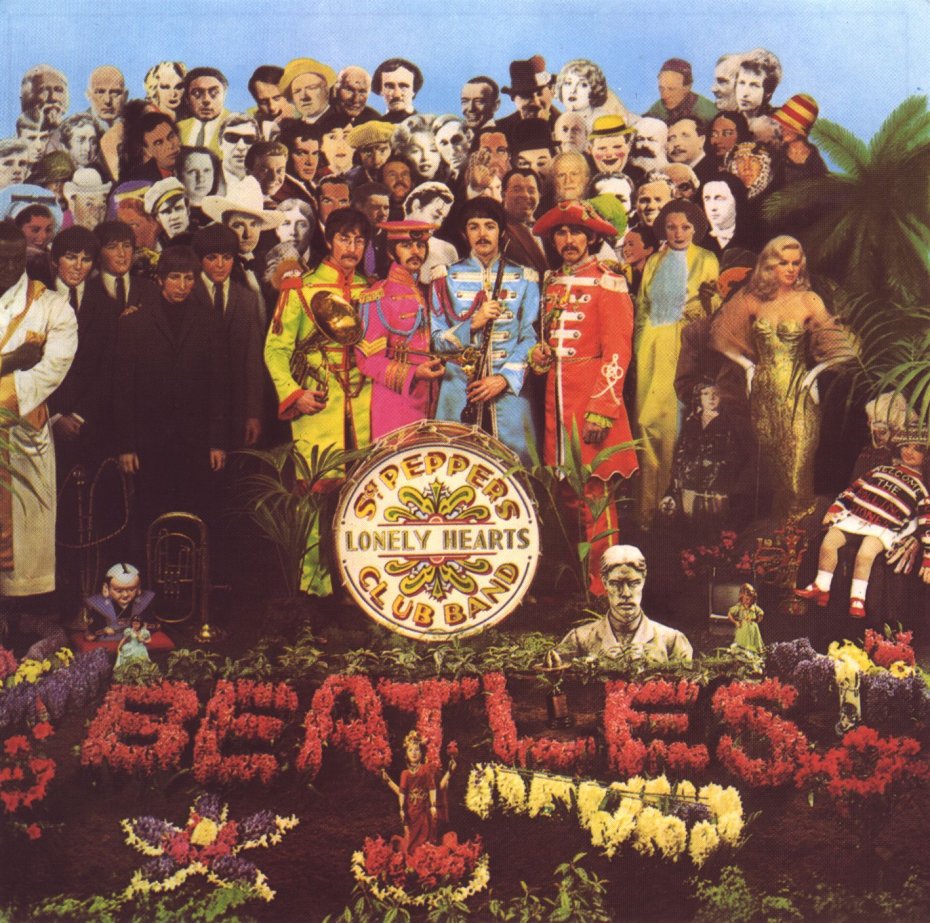
When Sgt. Pepper’s Lonely Hearts Club Band was released in 1967, I rushed out to get the album.

I still have it.

One of the songs that intrigued me most was When I’m Sixty-Four, by Paul McCartney. I was interested in it, not for the lyrics or the music, but the idea that anyone could be that old.

Even my father wasn’t 64.

Looking back on the words, it’s easy to see that they were written in a very different time to now.

A time before Email, Twitter, Facebook and Flickr.

A time before iPhones, iPads and MacBooks.

Hell, even a time before Apple.

When I get older losing my hair,

Many years from now,

Will you still be sending me a valentine

Birthday greetings bottle of wine?

If I’d been out till quarter to three

Would you lock the door,

Will you still need me, will you still feed me,

When I’m sixty-four?

oo oo oo oo oo oo oo oooo

You’ll be older too, (ah ah ah ah ah)

And if you say the word,

I could stay with you.

I could be handy mending a fuse

When your lights have gone.

You can knit a sweater by the fireside

Sunday mornings go for a ride.

Doing the garden, digging the weeds,

Who could ask for more?

Will you still need me, will you still feed me,

When I’m sixty-four?

Every summer we can rent a cottage

In the Isle of Wight, if it’s not too dear

We shall scrimp and save

Grandchildren on your knee

Vera, Chuck, and Dave

Send me a postcard, drop me a line,

Stating point of view.

Indicate precisely what you mean to say

Yours sincerely, Wasting Away.

Give me your answer, fill in a form

Mine for evermore

Will you still need me, will you still feed me,

When I’m sixty-four?

Whoo!

When I’m Sixty-Four was recorded in December 1966.

I Was Only Nineteen, but that’s another song.

Insights not platitudes.

December 1st, 2011

‘It’s all about you’ is the current positioning line for the Mazda CX9.

However it seems that this is a catch cry of a selfish, self-centered generation, rather than a line for a specific product.

It’s an attitude rather than an insight.

This same line is the title of a song from McFly and the Albanian singer Juliana Pasha. The line is also used for a diverse range of other products and causes, like: How To Get (and Keep) A Wonderful Man, The Centre for Complementary Health, Binge Drinking, Melbourne University Credit Union, a Day Spa and even, but not surprisingly, Jesus.

The result is that this line will roll of people’s consciousness like eggs off a Teflon fry pan.

‘Enjoy Christmas. Shop early’ is EBay’s line and like all good ones it’s based on a human truth.

For many people the stress of Christmas shopping can ruin the occasion. If you get it out of the way early, as EBay suggests, you will have more time to enjoy the event.

A good line needs to do more than just hold a mirror up to the consumer; it needs to connect with them.

Many ‘experts’ praise Social Media because it has the ability to create a two-way conversation with the user.

A good positioning line can do that, and more, because it demonstrates that the brand has insight into the needs of the consumer.

And like the EBay line it makes you stop, think and subconsciously nod in agreement.

After all, it’s all about you.

'Its all about you' by Tony Murphy

Making the old new again.

November 21st, 2011

In one of the early episodes of Mad Men I watched, in horror, as Don Draper tossed all the rubbish from a family picnic into the surrounding countryside.

Betty and the children looked on but no one said a word.

Then I realised that this was the 1960s and littering hadn’t gained the social sigma that it has now.

This was way before Keep Australia Beautiful, Bin It and Do The Right Thing campaigns. Or whatever were the US equivalents.

Most old farts my age wouldn’t dream of leaving their Fanta bottles in the park or dropping a Four’N Twenty meat pie bag on the street.

It’s the same with the X-Gens, Y-Gens and Generation Text. They were either influenced by the earlier anti litter campaigns or have been brainwashed by their peers or parents.

So why is there so much crap in my local park?

I wonder if there is a new generation, one that never got the message. This generation comes from all walks of life and is made up of all ages and genders. But there is one thing they have in common and that is they have never been influenced by the early anti litter campaigns.

Why? Because they weren’t here when the campaigns ran.

There is an entire generation of immigrant Australians who just don’t know that it’s a social no-no to leave your Subway wrapper, Domino’s Pizza box or Red Bull can on the street.

I don’t blame them, just as I didn’t blame Don Draper, they just don’t know any better.

I think it’s about time to recycle some of our old anti litter ads again.