Bruce Stainsby's Blog: Muttering from the mo

Autumn. (September 2012)

September 30th, 2012

When we left Barcelona the heat had subsided and we were experiencing the comfort of temperatures in the mid 20s’, not mid 30s’.

It was still warm and humid but a lot more bearable.

When we arrived in San Sebastian, only 570km north, everything was very different.

Autumn had arrived.

The temperature had dropped 10 degrees, the skies were overcast and it was raining. This was something we hand’t experienced in 4 months.

We were on the road to England through North East Spain and France, so I guess this was to be expected.

After San Sebastian we headed into the famous region of Bordeaux. Apart from wine the area is also known for the city of Bordeaux, a beautifully preserved 18th Century, UNESCO World Heritage listed city.

Certainly not part of the UNESCO listing, but still interesting, is the remains of the German U-Boat pens in the old port area.

From the city of Bordeaux we made a slight detour east, to Saint Emilion. The vines were changing colour and the grapes were plump, ripe and ready to pick.

The next few days were spent touring around Brittany, visiting some of the famous French Chateaus like Trécesson, Josselin, Kergrist and Tonquédec. On the way we also discovered some interesting ancient churches like the Chapel at St Cado and the Parish Close at Guimiliau as well as the Enchanted Forest at Huelgoat.

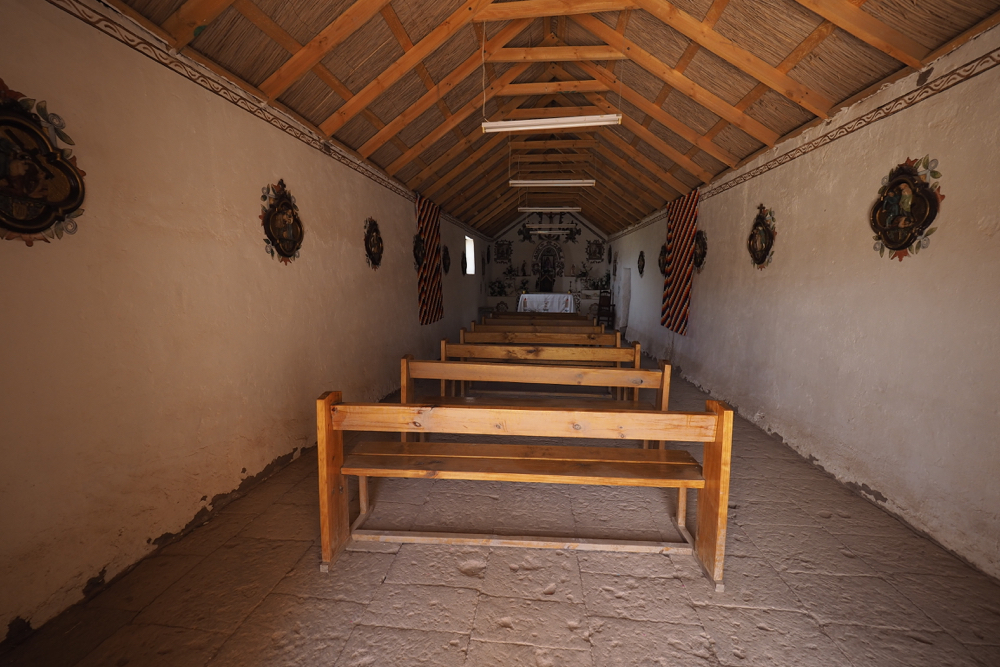
The current chapel in Saint Cado was built in the 12th century on the site of the original Romanesque church built by Saint Cado.

Saint Cado was a Welsh monk and a prince of Glamorgant who came to Brittany in the 6th century. He later returned to Wales where he was martyred.

Its not surprising then that many place names around this area sound decidedly Welsh.

The Parish Close at Guimiliau, dating from the 16th and 17th centuries, a is an elaborately decorated church surrounded by walled churchyard.

Apart from the historical wonders of Brittany and Normandy, there is one geographic peculiarity that make this area unique.

Massive tides play an important role in day to day life and have also had a big influence on the regions architecture, especially the ancient fortifications around Saint Malo.

At the end of the 17th Century, Louis XIV commissioned the famous military engineer, Marechel de Vauban, to strengthen the defenses around Saint Marlo. Vauban cleverly used the topography of the many tidal islands to build a series of fortifications.

And Saint Malo certainly needed defending as it was the main port of the Bretton Corsairs, who continually plundered British ships as they sailed into the English ports, laden with riches from the East.

In fact there was so much wealth in Saint Malo that Louis borrowed money from these Corsairs to pay for some of his exploits.

In more recent history, 80% of Saint Malo was destroyed during WW2 but has been painstakingly rebuilt. A walk around the 2.5km of ramparts gives you a wonderful appreciation of this wealthy pirate town.

These super tides have also had a big influence on another of the region’s landmarks, the famous island of Mont Saint Michel.

Another UNESCO Word Heritage site, Mont Saint Michel was at risk of losing its status as an island. Heavy silting from the damming of the canal, that was built at the end of the eighteen hundreds, had reduced the distance from the mainland to the island, from 1.5km to just a few meters.

Started in 2010 and due for completion in 2015, there is now a massive engineering project underway to restore the surrounding waterways.

The car park and causeway will be removed and a low profile bridge built, that will link the island to the mainland. Mega tones of silt will be trucked away, allowing the sea to surround Mont Saint Michel once again.

As impressive as the Abbey and the surrounding town is, the real feature of Mont Saint Michel is the way it dominates the landscape from many kilometers away.

Our Pythonesque experience. (September 2012)

September 24th, 2012

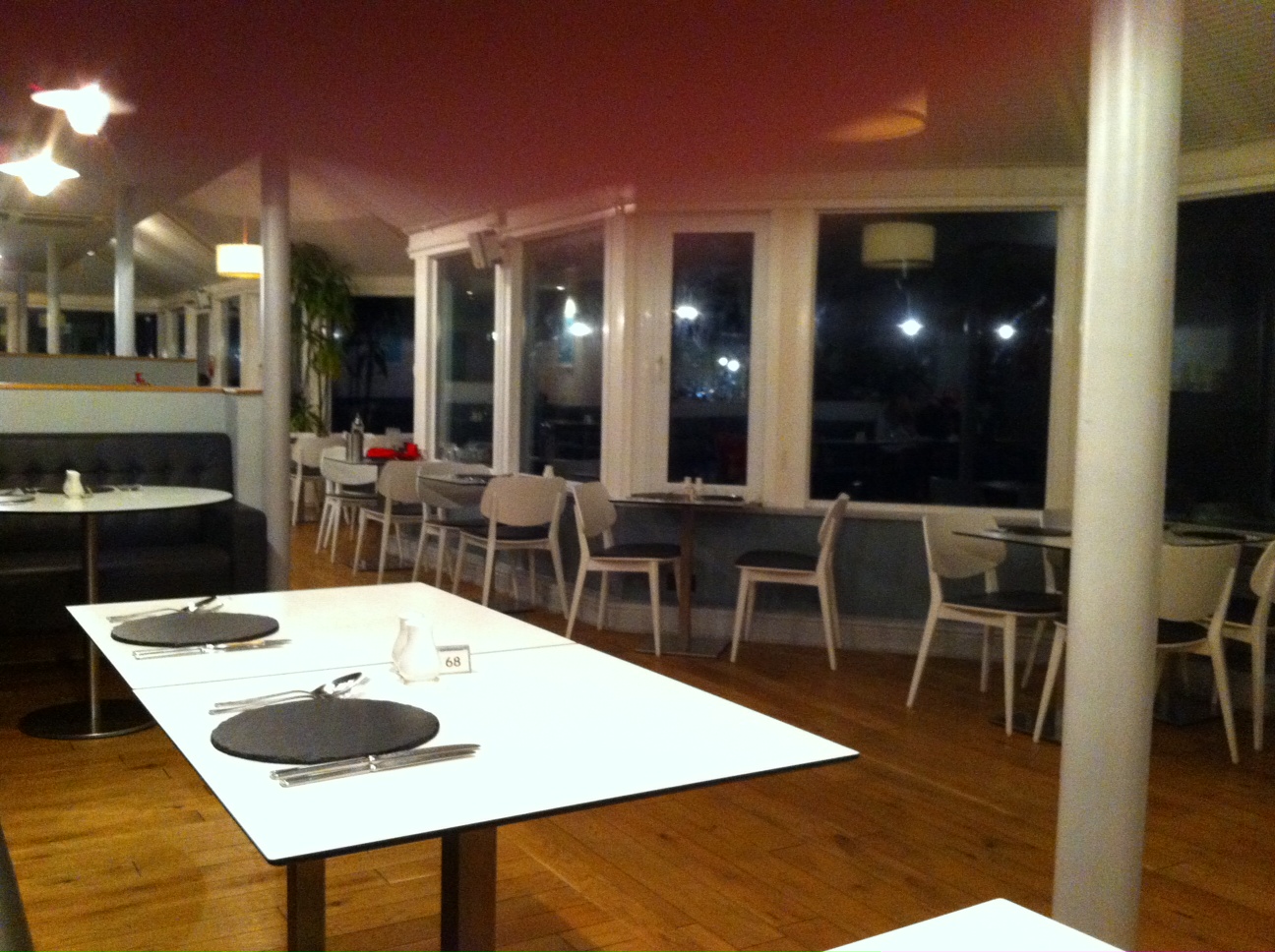
We are in Land’s End, Cornwall and have just had the most bizarre experience.

Over the last two nights we have booked dinner at the Land’s End Hotel restaurant. Each time we arrived at 8pm and the place was almost empty.

Tonight we arrived at 7:30 and not having booked, asked for a table. Like the previous two nights, there were far more empty tables than guests.

We were told that the next sitting wasn’t until 8:15 and we would have to wait, as the kitchen was overloaded and they were expecting a rush of guests at 7:45.

Come 7:45 the restaurant was still empty and we were still waiting.

I wonder if this was the place that inspired John Cleese to create Fawlty Towers?

Now there’s a clever idea. (September 2012)

September 15th, 2012

Bordeaux is a beautifully preserved 18th Century city and classified on the UNESCO World Heritage List as “an outstanding urban and architectural ensemble”.

It has one of Europe’s largest collections of 18th Century urban architecture with most buildings being no more than five storeys high.

It also has a new tram system, with 44km of track, that has only been operating since 2003. This is despite the fact that Bordeaux had over 200km of track in 1947. These were all removed to make way for the more modern bus.

What is so smart about the new Bordeaux system is that it uses a ground level power supply in the city centre. This alleviates the need for overhead wires and leaves the view of the elegant city buildings unhindered.

As I spend most of my time, when taking snaps, trying to crop out nasty intrusions like power lines, I find this system very clever.

Osborne. (September 2012)

September 9th, 2012

The Osborne Sherry Company was founded in 1772 by Thomas Osborne Mann.

In fact it’s the second oldest company in Spain.

In 1956 they started to erect posters, featuring their logo of a large black bull, designed by Manolo Prieto and the words ‘Brandy of Jerez’ painted in red over the bull.

The original posters were smaller but were later enlarged, to their current height of 14 meters, to comply with new laws prohibiting outdoor advertising to within 150 meters of a major road.

In 1994 another law was passed banning all outdoor advertising.

The Osborne bull was doomed.

However public response was so strong that they were allowed to remain, so long as they were painted completely black and the original brand name was removed.

I remember seeing these large, almost surreal, silhouettes in 1972, 2007 and then again in 2008.

The Osborne brand has always remained embedded in my subconscious.

Even without the product name they epitomise great branding.

The Osborne bull has risen beyond advertising and marketing to become the unofficial symbol of Spain.

He is seen on the backs of cars, on flags, stickers and key rings.

There are still over 90 Osborne bull silhouettes dotted all over Spain.

We drove nearly 600km to get some snaps of two of them.


Vodafone.

September 4th, 2012

We cancelled our contract with Vodafone in Australia because of their poor performance and inability to deliver on their promises.

Vodafone consistently spend large media dollars in hyping up their services. They have adopted the approach that if you continually promote a fallacy, it will become fact.

Their inability to deliver has lead to a class action in Australia and a mass exodus of their clients.

They have now suspended their considerable media spend, while they attempt to improve their coverage and services.

We stupidly selected Vodafone to purchase a broadband ‘Módem USB Stick’ for coverage in Spain.

Apparently this corporate leopard doesn’t easily change its spots.

The connection was poor and there were problems in recharging our account online.

So much so that we had to drive back to where we purchased the key and get it manually recharged there.

Their explanation was that the online service wasn’t working today but would be ok, ‘mañana’.

It still isn’t working.

Marketing works well when the delivery lives up to the promise.

Vodafone in Spain are following the Australian or more possibly the international strategy of promise first then try and deliver later.

Advertising will only work when it’s based on truth, anything else is phoney.


On the road again. (August 2012)

September 2nd, 2012

“Goin’ places that I’ve never been

Seein’ things that I may never see again…”

In the spirit of Willy Nelson we are back touring.

This time it’s a shortish trip from our temporary home in Barcelona to Granada, the Sierra Nevada and Cordoba and beyond.

Our excuse was to drive Hayden to Granada, so he could spend some time there with Andrea and then bring them both back to Barcelona.

Granada is Andrea’s birth place so she was our guide, and a very good one at that.

We wandered the streets, enjoyed the tapas, which is free here, and visited the tourist attractions.

Granada is a beautiful city with a huge Moorish influence.

This is best experienced in the Alhambra Palace that proudly stands guard, high on a hill, overlooking the city.

The evidence of Granada’s Arabic and Muslim past also affects your other senses.

You can smell the spice bazaars all over the city and shisha pipes are still found in some tea houses.

The Alhambra is the most popular tourist attraction in Spain, with over 8,000 visitors a day during the high season.

It was the high season so we had to book days in advance to get an entry time, in the late afternoon, when the sun had lost some of its sting.

The Alhambra was built during the middle of the 10th century by the Berber ruler Badis ben Habus.

After the conquest by the Catholic Kings in 1492 some parts were used by the Christian rulers. Then in 1527 The Palace of Charles V, Holy Roman Emperor was built into the centre of the Alhambra.

The sight of a Spanish Renaissance palace in the middle of the Nasrid fortifications is a little incongruous, but that’s part of the charm of the Alhambra.

After the heat and history of Granada we headed into the Sierra Nevada, via the Cabo de Gata, the largest terrestrial-maritime reserve in the European Western Mediterranean Sea.

However we stayed on land, so there wasn’t much to see there, except the sea.

We then travelled north, to the southern side of the Sierra Nevada, and the small village of Capileira.

This is the highest of three villages that cling to a steep mountain side.

Tourists and Spaniards alike come to these parts for walking, mountain bike riding and Flamenco dance lessons.

We opted for the walking, and at the suggestion of the hotel, did the 7.5 km Peña del Angel track. This gave us the opportunity to see the villages from higher up the mountain and also view the panorama that sweeps down the valley and out to the Mediterranean.

Apparently on a clear winter’s day you can see Morocco.

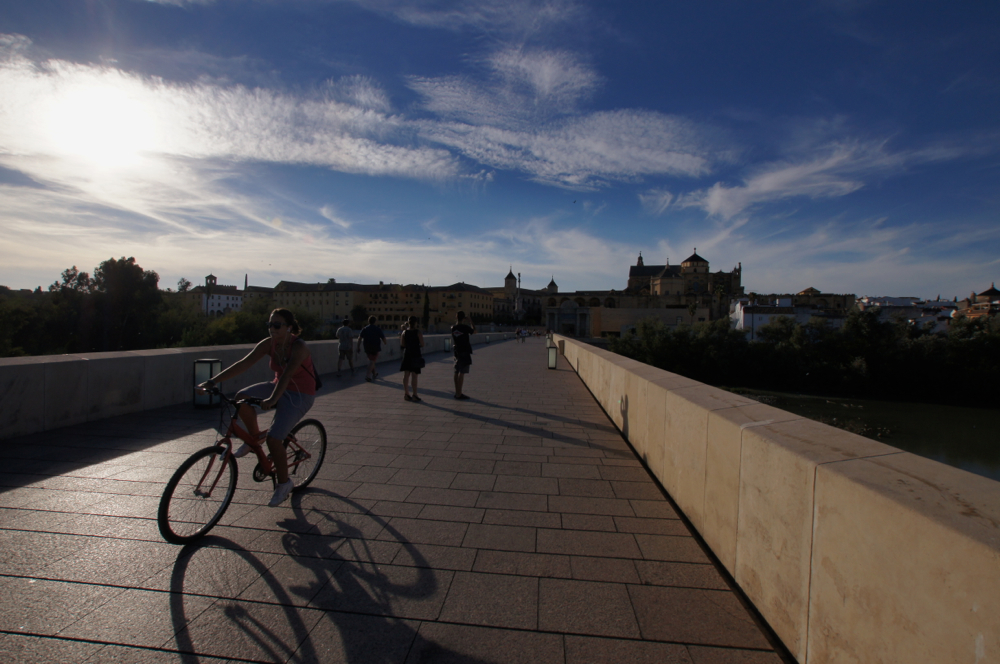
From the mountains we headed north again to the ancient city of Cordoba. There we visited the amazing Cathedral of Cordoba or as the locals call it Mezquita-Catedral, as it’s both a church and a mosque

Originally the site was a pagan temple then the Visigothic Basilica of San Vicente and in 785 the conquering Moors built the mosque.

When the Catholic Kings reclaimed Spain it became a Christian church again and later a Catholic Cathedral was inserted into the middle of the mosque structure. Even the minaret had a bell tower built around it.

On the way back to Granada we visited the historic cities of Baeza and Úbeda, both surrounded by hills of olive groves.

These cities are World Heritage Sites, built in a style known as Civic Renaissance. There is also evidence of Roman, Moorish, Romanesque and Gothic styles but it’s the beautifully preserved Renaissance buildings that this area is famous for.

The halcyon years for Baeza and Úbeda were during the 16th Century, as the 17th Century brought hard times and civic construction halted.

Because of this economic down turn, no new building were constructed, thus saving the Renaissance buildings from being plundered for building materials.

It was then back to Barcelona for a few weeks, so we could plan our next road trip.

La Festa de Gràcia. (August 2012)

August 18th, 2012

Almost every year since the early eighteen hundreds, La Festa de Gràcia has been held in the old district of Gràcia in Barcelona.

This year is the 196th anniversary of the festival.

It starts on August 15, the Assumption Day public holiday, and runs for seven days.

It’s the height of summer in Barcelona, so it’s hot and the streets are full of tourists.

This year 18 streets and plazas will take part in the festival. Each one is decorated in a theme and prizes are given for various categories.

Not everyone in the streets help, in fact there is some resistance to the disruption caused by scaffolding, painting and the crowds of extra people flooding into the narrow streets.

Life has to go on, so the residents work around the mayhem by squeezing past the weird and wonderful creations that are now dominating their normally quiet environment .

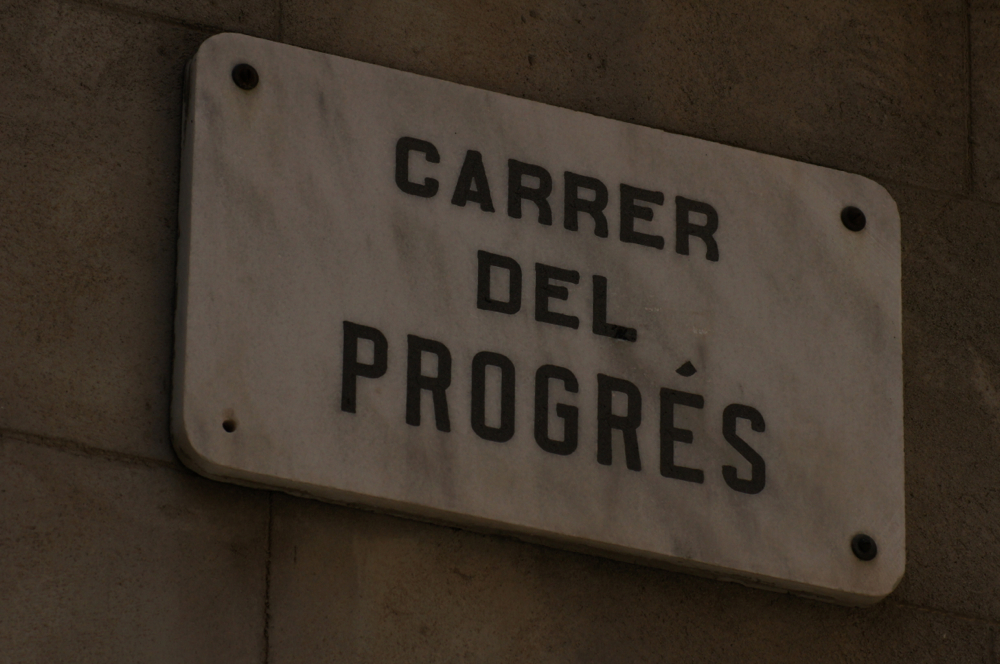
Hayden has spent four years living in Gràcia, three of them in Carrer Progress, one of the participating streets.

This is the third year that he has been part of the dedicated group who make it all happen.

As we were in Barcelona, staying with Hayden, we volunteered to put in a few hours work on the last night before the festival opened.

When we arrived, at around midday, I wondered how it would all come together, there appeared to be more to do than had been done.

When we left at 8:30 that evening, it still seemed an insurmountable task to get everything completed for a 2pm start the next day.

Hayden, like a number of other volunteers, didn’t get to bed that night.

Carrer Progrés had chosen Star Wars as their theme and images from the George Lucas classic were everywhere.

Apart from Darth Vader there were Jawas, Chewbacca, Jabba the Hutt, C-3PO, Yoda, several Storm Troopers and the Mos Eisley Cantina band.

All were very popular backdrops for the hundreds of people who personalised their visit with a snap in front of their favorite character.

Right message, wrong place.

August 12th, 2012

This poster can be seen along the roadsides around Interlaken.

A ‘cool’ looking Archangel Gabriel, imploring drivers to slow down.

The trouble is the motorists in this area don’t speed, well not as much as they do in many of the countries around Switzerland.

Placement is an important factor when buying media, so I think this particular poster might do a better job in Bulgaria, Romania, Montenegro, Croatia, France and Italy.

After all Gabriel is honored by many faiths.


Faster than Contiki. (August 2012)

August 11th, 2012

I have never done a Contiki Tour and probably won’t, as they are aimed at target market half my age.

Apparently they pack a lot into a small amount of time, with many destinations viewed only through the bus window.

We have just done our own version of a Contiki Tour, driving through 9 countries in 6 days, covering over 2,700 km.

We started in Split, Croatia and then drove through Slovenia, Italy, Austria, Germany, Liechtenstein, Switzerland, France and finally into Spain and Barcelona.

We spent one night in Trieste, Italy and in Turna Malbun, Liechtenstein, then two nights in Interlaken, Switzerland and the final night in Thiers, France.

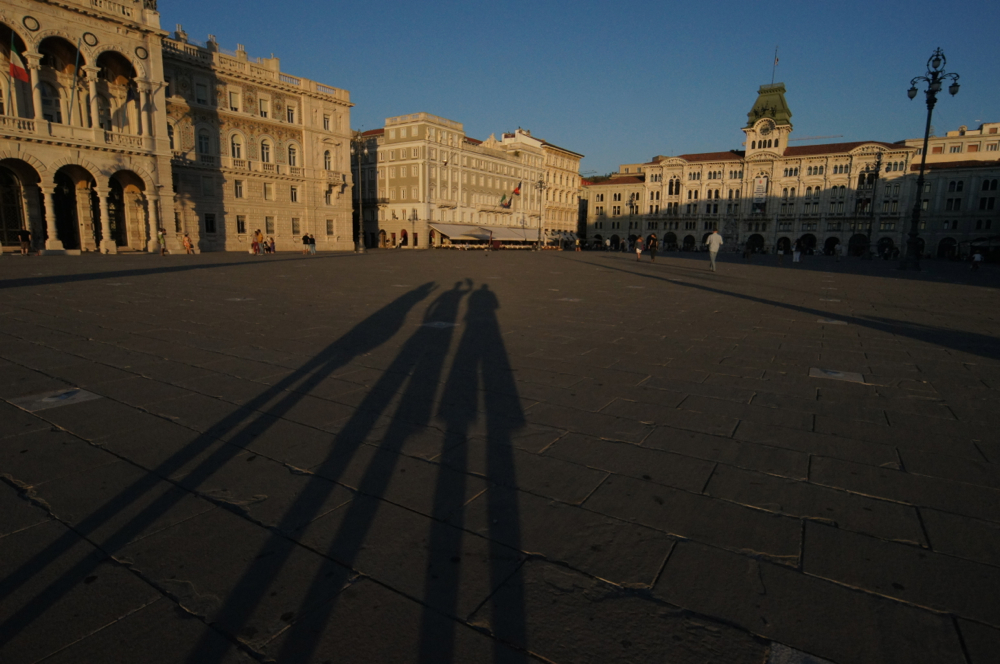
We had an evening walking around the beautiful old city of Trieste and the Piazza Unità d’Italia, with it’s Hapsburg inspired municipal buildings and palaces. This is one of the largest squares in Europe and faces the Adriatic Sea.

High in the mountains in Turna Malbun, the wild flowers are still in bloom, while around Interlaken the kids cool off in the freezing aquamarine waters of the alpine lakes.

Even the old industrial revolution town of Thiers, famous for its cutlery, has its charms. The abandoned forges along the river are either being reclaimed by the forest or converted into trendy apartments and art galleries.

While the grave yard at the church of St Jean also has an industrial feel, with many of the memorials being made out of locally forged and fabricated steel.

There is a benefit in driving all day, as you arrive at your destination late in the afternoon, just as the summer sun is sinking into the west.

These are the magic hours for light and therefore photography.

Our summer holiday. (July/August 2012)

August 8th, 2012

We are in Croatia for a week or so, with Hayden and Andrea to share the experience a European summer holiday.

I guess to most, everything we have done in the last six months of our travels has seemed to been a ‘holiday’

But believe me, constantly travelling, experiencing new cultures and learning about old ones, is a lot more strenuous than a week in the sun.

We firstly spent a few days in Dubrovnik, one of the world’s most spectacular and well preserved Medieval walled cities.

It has survived the Ottomans, Venetians and more recently the Croatian War of Independence.

Walking around the almost 2 kilometers of uninterrupted Dubrovnik walls gives you a sense of why they were never breached by a hostile force.

The Walls of Dubrovnik, as we see them today, were mainly built, modified and then extended, between the 12 and 17th Centuries.

The best way to get an overall picture of city is to take the funicular up to the rocky outcrop overlooking Dubrovnik and the port.

This was the cultural part of our Croatian experience and much the same as we have been doing for the last 6 months.

Next we caught the ferry to Brac, a small island off the Croatian coast near Split.

We rented an apartment in the centre of Bol, one of the main resort towns on the island.

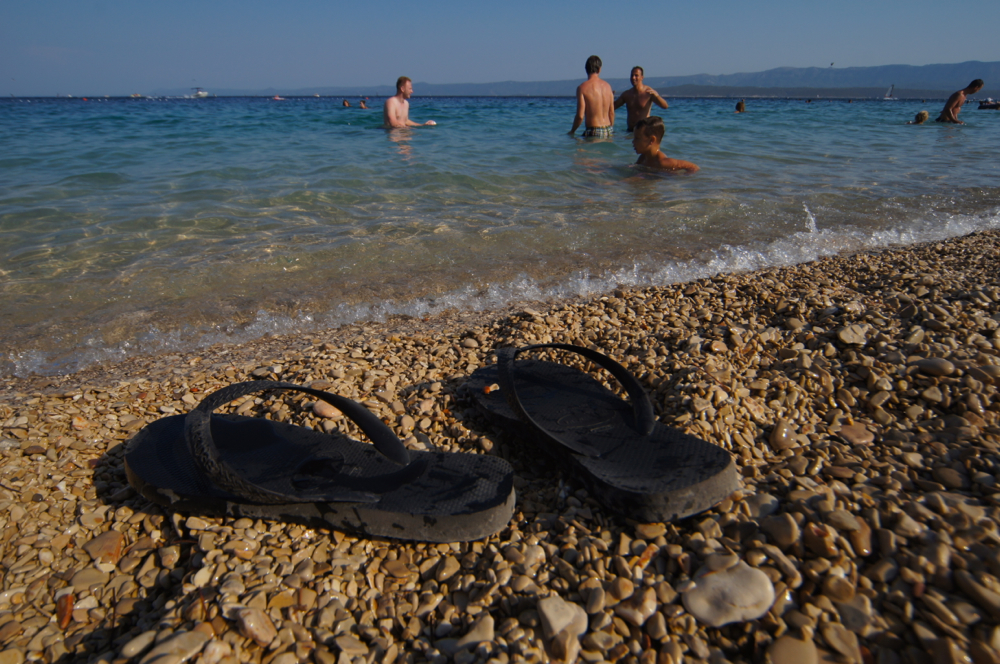
The island is alive with holiday makers from all over Europe and other parts as well. There is a very famous pebble beach, Zlantni Rat, about a 30 minutes casual walk from our apartment.

Apart from walking you can get to the beach by a small ‘Train’ and a large number of ferries that leave from around the harbour in Bol.

Zlantni Rat is on a promontory and the shape of the beach shifts due to the winds and currents. There is a reliably afternoon breeze known as the Maestral that blows in to cool down the holiday makers baking in the hot Croatian sun.

And there are thousands of them crammed onto this small peninsular. Many lying on the pebbly beach but far more on the rented sun lounges, under rented umbrellas.

They can also retreat from the heat into the shade of the trees that run part of the way down the peninsula.

If something more strenuous is needed then there is no shortage of water activities like tubing, Banana Boat rides and a hybrid pedalo/water slide.

And when the Maestral blows it’s perfect for wind surfing and kite boarding.

We were told that on the north of the island was Lovrečina, a stretch of ‘long sandy beach’.

It was a beach and it was sandy!

It was also very shallow, which meant that it was perfect for families with small children. Stumbling over pebbles gave way to running flat out through the shallows and building sand castles on the beach.

Some of them had a remarkable resemblance to the fortifications at Dubrovnik.

We then took the ferry from Brac to the mainland and Split, an ancient town that is built around the Roman palace of the Emperor Diocletian, in AD 305, as his retirement home.

Between two mountain ranges on the outskirts of Split is Klis Fortress. It has a commanding view of the city and coastline. It’s little wonder that it was able to withstand a siege by the Ottomans for over 25 years in the early 16th century.

Rejuvenated again, we were now back into our more familiar and strenuous pattern of site seeing and stumbling over ruins.

After all we had just had a holiday.