Bruce Stainsby's Blog: Muttering from the mo

The madmen behind Mad Men.

December 9th, 2013

Since our return from Europe and more recently South Korea and Japan, we have decided to catch up on some of the TV series we missed in 2012.

Not surprisingly one series I have always enjoyed is Mad Men, a period drama about the New York advertising industry in the 1960s’.

New York was at the centre of what was called the Creative Revolution during these halcyon years.

The ad agency Doyle Dane Bernbach (DDB) developed ground breaking campaigns for clients like Volkswagen and Avis during this time.

Mad Men was created and produced by Matthew Weiner, an exceptional screen writer who was also involved in the highly acclaimed HBO series The Sopranos.

Having been inducted into advertising at the end of that amazing era and being a student of the ads of that period, I was intrigued as to how Weiner got his material.

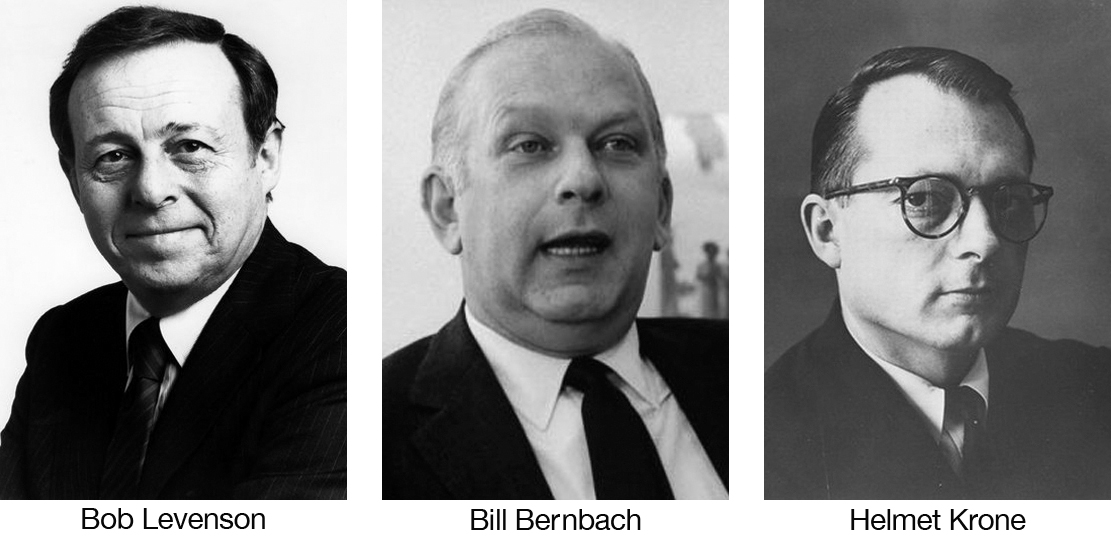
It turns out that one of his main consultants was Bob Levenson, a veteran ad man from DDB. Levenson, together with Bill Bernbach and art director Helmet Krone produced some of the most well know and enduring campaigns of this golden age.

It’s not surprising that Mad Men has become such a hit, as it offers the viewer a real insight into the lives, work, frustrations, faults and foibles of the men and women of Madison Avenue in the 1960s.

Mad_Men_3


In Tokyo it’s always peak hour. (October 2013)

November 8th, 2013

Tokyo is big.

It is regarded as a Megalopolis and one of the three command centers for the world economy, along with New York and London. It is also has the largest metropolitan area of any city in the world.

Tokyo has over 13 million inhabitants and each day a further 2.5 million people commute into the city centre.

It’s a city that never seems to stop yet there is no road rage, raised voices or even looks of annoyance.

The Japanese are too polite for that.

In the mornings and evenings it’s the people from the ‘City’, with their black suits and white shirts, that stream through the railway stations, single-mindedly heading to the office.  Trying to walk in the opposite direction was described to me as, “You feel like you’re a salmon swimming up-stream”

The business people of Tokyo work long hours and they will never leave the office if their boss is still there.

The crowds don’t stop once the business people are at work. Then the groups ‘Nanas’ are out with their friends, visiting shrines and sites of historical importance. The older women are not alone as, in equally large numbers, school kids are also out on excursions to the same places.

Late in the evening, after business shuts down, Tokyo again fills up, this time with young ‘Hipsters’ heading to the bars, clubs or whatever is the most trendy place at the time.

We were told that a Hawaiian pancake shop had just opened and that was the current hot spot. The proof of its popularity were the hundreds lining the streets just to sample this latest fad.

On our first day we had arranged to do a morning tour of Tokyo.

The rain was back, a result of our fourth or fifth typhoon, we had lost count. The new camera was relegated to the hotel room.

It’s easier to take snaps, while holding an umbrella, dodging puddles and chasing a fast moving tour guide, with the much smaller RX100.

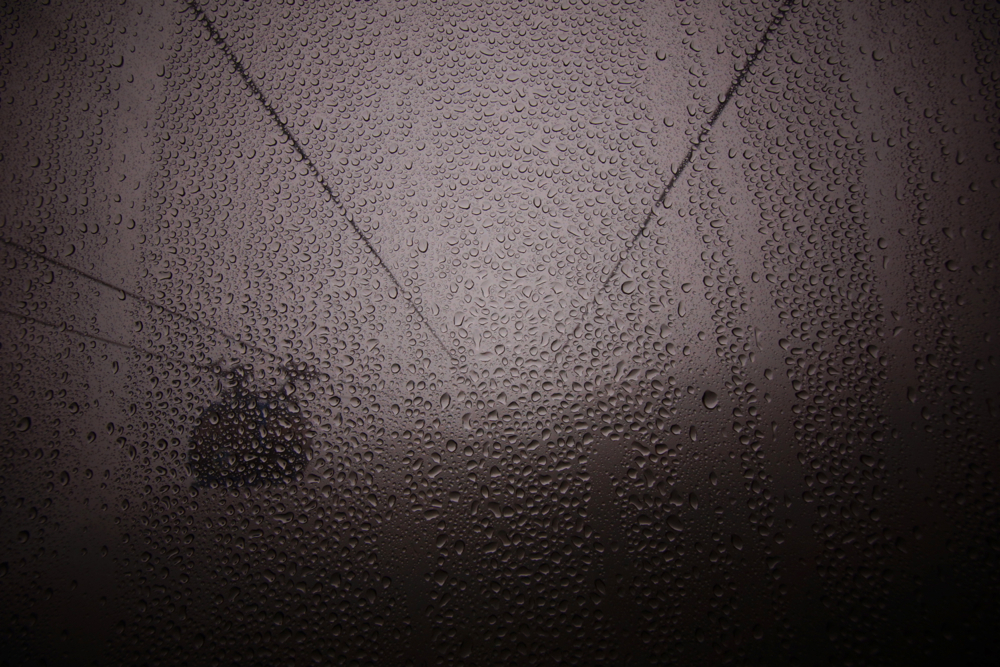
Our first stop was the Tokyo Tower, where we were whisked up to the observation deck to get a ‘special’ view of Tokyo. It was very special indeed, as the windows were either obscured by the condensation, or scaffolding and netting from the current renovations.

Tokyo Tower is 333 meters high and was built in 1958. It’s just slightly higher than the Eiffel Tower, which is 320 meters. After the war the people of Tokyo wanted their tower to be taller than the one in Europe. That post war sentiment is still in existence today, hence the line:

“The Tower makes you happy.”

Tokyo Tower is very similar in design to the one that Gustave built back in 1889.

“The Japanese are copycats” was a quote from our guide on the morning tour.

The rain continue and so did we.

Meiji Shrine was next.

After the emperor’s death, in 1912, the Japanese Government decided to build the shrine to commemorate his part in the Meiji Restoration. Construction started in 1915 and was finally completed in 1926.

It was destroyed during WW2 and rebuilt by public funding in 1958.

The final stop of our morning tour was the East Garden of the Imperial Palace. This is the only area of the palace that is accessible to the general public. Except on January 2nd, for New Year and December 23rd, for the Emperor’s birthday. Then the public can enter through the Nakamon, or inner gate, where the current Emperor usually gives a short speech.

The palace is built on the site of of the old Edo castle and the area, including the gardens, measures 3.41 square kilometers.

During the Japanese property boom of the 1980s, the land was said to be worth more than all the real estate in California.

In the afternoon, free from the umbilical cord of the tour guide, we went into Tokyo city.

The Ginza is regarded as one of the most luxurious shopping strips in the world. That’s easy to understand when you see the big brands lined up shoulder-to-shoulder along this wide boulevard.

It was Saturday and the road was blocked to traffic, so we were able to meander from side to side.

Ironically this mecca of luxury was a former swamp that was reclaimed in the 16th century.

Trying to master the complexities of the Tokyo Metro, we headed down to Kaminarimon Gate, Asakusa Shrine and the 5 storied pagoda. The shrine was constructed in 1649, during the Edo Period.

It was dusk and the shrine and pagoda were illuminated against the deep blue evening sky.

In the same area, just near the Sumida River, is the Asahi Brew Hall.

This was designed by the French architect and industrial designer, Philippe Starck. Completed in 1989 it is one of the most contemporary pieces of architecture in Tokyo.

The main building is a black cube with illuminated glass steps on all sides. It is topped with golden styalised beer foam.

The locals call it the ‘Golden Turd’.

We had booked another tour, this one was an all day affair, called the Nikko World Heritage Tour.

It involved a reasonably early start and a long drive to Nikko, which is to the north west of Tokyo in the middle of Honshu Island.

We did get our one and only glimpse of Mount Fuji as we were driving out of Tokyo.

Unfortunately the main gate of the Nikko Toshogu Shrine was being renovated and was surrounded by a huge temporary construction.

It was Sunday and I am sure that half of Tokyo’s 13 million inhabitants were out on the road after a wet few days. Many of them had come to Nikko, so the shrine was awash with day trippers. It was difficult to get a clear view of anything, let alone a good shot, as there were so many people.

Our time at the shrine was cut short as we had been held up in the traffic jam coming out of Tokyo.

Our guide, Yasushi, told us the Japanese are very liberal when it comes to religion. Ninety percent of the population follow Shintoism, eighty percent Buddhism and fifty percent get married in a Christian church. However when they are asked, they deny having any religion and most of them only visit the shrine as a tourist.

There were a lot of tourists there that day.

We then went to Tamozawa Imperial Villa. The villa was constructed in 1899 for Prince Yoshihito, who was later to become emperor. It was used by three emperors and three princes until 1947. The current emperor was evacuated to the villa in 1943 and spent about a year there as a young prince.

There are 106 rooms in the villa and many of them overlook a beautifully crafted Japanese garden. It is only one third of its original size but still very impressive.

It was opened to the public in 2000 after extensive renovations.

Kirifuri Falls, just out of Nikko, was our final destination for the day. It was late in the afternoon and the low light illuminated the Autumn leaves that surrounded the 75 meter drop.

It had been a long 12 hour day, with half of it sitting on a bus.

I think I am over escorted tours, well at least for the time being.

On our third day we took ourselves south west of Tokyo to the Miura Peninsula. Firstly to Hase to see the Big Buddha and then to Kamakura.

In the past few weeks we have been warned several times about the problems that deer and monkeys pose to tourists, here it was kites.

In Hase they were constantly circling the shrine and wire had been strung across the garden to deter them from swooping on unsuspecting visitors.

Hasedera Temple in Hase has its origins dating back to 721 AD when the monk Tokudo Shonin commissioned two large statues of Buddha from a giant camphor wood tree.

Just up the road from the shrine is the Great Buddha Kamakura. Construction of this national treasure was started in 1252 and continued for ten more years. It is truly great, measuring 13.4 meters high and weighing 121 tones.

Hase is a fishing village and the beach was full of fishing boats with fishermen mending their nets.

We then took the train back a few stops to the the seaside town of Kamakura. This was the capital of Japan from 1192 to 1333.

After a couple of false starts we found the Tsurugaoka Hachimangu Shrine that dates back to 1063.

Here there were many children, with their families, celebrating either their third, fifth or seventh birthdays. They go there to be blessed for a lucky, healthy life, dressed in traditional costume. Most struggle up the steep stairs, unaccustomed to wearing the classic Japanese sandal, a style of thong that is worn with socks.

On our last day we tacked the morning metro rush and headed to the Tsukiji Fish Market. This was our first real experience of the metro crush. The carriages are so tightly packed that you can barely move and when the train jolts to a stop, there is little fear of falling over, as there just isn’t enough room.

This is the largest fish market in Japan and the variety on offer was amazing. Frozen Tuna is a specialty of Tsukiji and cold carcasses are everywhere. They are so large that the wholesalers cut them into manageable pieced with a bandsaw.

In between the siteseeing we had a great lunch with our nephew Mike, his lovely wife Natsumi and their delightful children Manami and Josh.

It was a good opportunity to get a bit of insider information about the workings of Tokyo from Natsumi.

I have always loved Japanese woodblock prints, especially the ones by Katsushika Hokusai (1760-1849) so we headed back to the Kaminarimon Gate.

Buying the real thing was out of the question but I did manage to find a well made copy, ’36 Views of Mt. Fuji [The Great Wave off Kanagawa]’ actually done as a woodblock and the same size as the original.

Then back down to the river to get a few shots of the Asahi Beer Hall in daylight.

One last trip on the subway took us to the Tokyo Railway Station.

Opened in 1914, the station is said to be based on the Amsterdam’s main station, however the architect, Terunobu Fujimora, denied this.

Its other claim to fame is that the Prime Minister Hara Takashi was assassinated there in 1921.

We were set an ambitious four week itinerary, by Mina from Japan Package Tours and despite the typhoons, we managed to tick most places off the list.


The worst drivers in the world. (October 2013)

October 30th, 2013

It doesn’t matter if you are in Barcelona, Brisbane or Berlin, the world’s worst drivers are the ones that drive taxis.

Japan is a country where manners and civility are part of the culture. Road rage is non existent and people respect each other.

Here the taxis are retro 70s’ Toyotas and Nissans, with the occasional ‘green’, Prius. The drivers all wear ties and hats and many also have white gloves. They will even get out of the cab and help you with your luggage.

But, and there is always a but with cabbies, once they are behind the wheel they are as rude, arrogant and selfish as any of their counterparts around the world.

Cabbies are professional drivers who spend 8 to 10 hours day behind the wheel. They should be the best drivers in the world but almost to a man (and most of them are men) they are the worst.


Looking for Mount Fuji. (October 2013)

October 26th, 2013

Getting to Hakone was by far the most complicated journey yet.

We started with a local train, ‘Hilda 6’ from Takayama to Nagoya then the Bullet Train ‘Hikari 520’ from Nagoya to Odawara and finally a local bus ‘Hakone Tozan’ from Odawara to our hotel at Hakone.

Our Japan Rail Pass was due to run out so we purchased a Hakone Free Pass at Odawara Station. This, we were told, would get us onto all sorts of transport in the Hakone area.

Hakone is in the mountains on the eastern side of the Hakone Pass and centered around Lake Ashi. It’s a volcanically active area with many hot springs or Onsen. It lies within the Fuji-Hakone-Izu National Park, which has been designated by UNESCO as a Geopark.

The main reason for our stop here was to see Mount Fuji.

Our map showed us that there were three excellent places to view this icon of Japan.

The first was from the Hakone Rope-way between Ubako Station and Owakundani Station. The second was from the Hakone Sightseeing Cruise on Lake Ashi, near Hakonemachi and Moto-Hakone. Our third opportunity was from the observatory in the Hakone Detached Palace Garden in Hakonemachi.

We arrived late in the afternoon, so all we could manage was a quick walk down to the lake to determine where the rope-way and cruise pier were located.

Unfortunately the weather was closing in again and when we looked out the next morning, the skies were grey and the clouds hanging low over the mountains.

Any chance of seeing Fuji was remote.

We had paid for the Hakone Free Pass and were determined to use it to the max.

Firstly we took the Hakone Rope-way to Owakunani Station, via Ubako. We could see Lake Ashi below but not much more.

No sight of Fuji, so that was our first opportunity gone.

At Owakunani we stopped to see the geothermal activity. Steam billowing into the air and an acrid smell of sulfurs.

The highlight for most of the local tourists was the ‘Black Eggs’, cooked in the boiling volcanic ponds.

We continued on the rope-way to Sounzan and then changed to the Hakone Tozan Cable-car. This took us to Gora.

By now the weather was getting worse, we were in the clouds and visibility was down to a few hundred meters.

Not to be dissuaded we decided to retrace our steps and try our luck on the lake, so we headed back to Togendai-ko, along the cable car and rope-way.

Both the rope-way and cable car were included in our Hakone Free Pass, as was the sightseeing cruise we were about to embark on.

We had heard about the Hakone Sightseeing Cruise boats before we arrived, but nothing could have prepared us for the shock of seeing ‘Pirate Ships’ sailing, well motoring, around a lake in Japan.

There is a certain amount of Disneyland in a lot of what we had seen, but this stood out. These are state-of-the-art passenger ferries complete with sonar snouts and all the electronics, yet they look like something Jack Sparrow would have been proud to captain.

On closer inspection we found that the sails were fibre glass and the crew were plastic dummies. There were three of these ships plying the waters of Lake Ashi, one green, another red and the other one gold.

We paid a little extra and got to sit in the first class section, where the interior was in the Rococo style and very opulent.

The lake cruise was our second opportunity to see the famed Mount Fuji but now the weather was getting worse. The clouds hung like a wet curtain over the mountains, blocking any chance we had of seeing one of the ‘Three Holy Mountains’ of Japan.

Mount Fuji was made a UNESCO World Heritage Site in June this year. I hope they could see it then because it’s invisible now.

We took the pirate ship down Lake Ashi to Hakone Machi-ok and then walked to Moto Hakone-ko.

This walk took us through an avenue of ancient cedar trees and back to the lake. This was originally part of an old Tokaido Highway that linked Tokyo with Kyoto during the feudal, or Edo period. The trees were planted by the Edo Shogunate in 1618 and provided shelter from the hot sun in summer and the snow in winter.

Our third and final opportunity to see Mount Fuji was from the observatory in the Hakone Detached Palace Gardens. We passed it on our way to pick up the cruise boat and decided that it wasn’t worth the effort as we couldn’t even see the lookout from the road.

We then returned to Togendai-ko on the ferry and, having given up any thought of seeing Fuji, caught a bus to Sengokuhara.

Again this trip was all included in the amazing Hakone Free Pass.

During autumn Sengokuhara is home to acres of ‘Silver Grass’ that stretches out from the base of Mount Daigatake. A species of flowering plant, in the grass family, it displays a delicate array of autumn colours.

Even with the weather as bad as it was, there were still plenty of local and international tourists, out in the damp, wandering around the sodden grass.

The clouds were getting lower and the rain more persistent. We could barely see the hills around us, let alone the illusive Fuji.

There was an exhibition of Mount Fuji photographs in the hotel foyer and looking at these was about as close as we came to seeing the actual mountain.

That is, apart from from the engraving of Mount Fuji on the back of the 1,000 Yen note.

We were seeing a lot of these, but they were disappearing rapidly.


Takayama, tradition and heritage. (October 2013)

October 24th, 2013

We took two trains to get to Takayama and the rain had set in yet again. This wasn’t the result of the latest Typhoon, that was yet to reach us.

Takayama was a castle town in the late 16th century, however it was first settled in the Jomon period, about 1,200 BC. It is still a very traditional town of narrow streets filled with inns, old shops, Ryokans, sake breweries and woodworking workshops, a craft that has made Takayama famous.

Over a 300 year period Takayama developed a unique culture, and due to its high altitude, isolated location and cold winters, has been able to preserve it.

It was therefore fitting that we were staying in another Ryokan, or traditional Japanese inn.

As with the Ryokan in Beppu everything was on a low, minimalist scale. But unlike Bepu, where we ate in a separate room, here, both breakfast and dinner were served in our room.

So to overcome a slight case of claustrophobia and despite the rain, we were still able to get out and walk around the streets, as they all had covered walk-ways.

Miyagawa is the main river running through the centre of Takayama. Every day, spread out along the river banks, are two ‘Morning Markets’, the Miyagawa and the Jinya mae.

On our first morning we visited the Miyagawa Market, a collection of food, handycraft and local produce stalls.

From the market we had a short stroll to the see the elaborate Temple floats in the Takayama Festival Float Exhibition Hall, just near the Sakurayama Hachimangu Shrine.

Housed in the festival hall are the Yatai or Festival Floats. These floats, some dating back to the 17th century, are pulled through the streets of the town in Spring and Autumn.

The festivals began about 350 years ago, as a simple village ceremony. Now twelve floats take part in the spring festival and eleven in the autumn. The hall displays four floats, on rotation, from the autumn festival.

The region became famous for brewing sake, woodworking and cloth manufacturing. Then the festival received support from the local merchants, who had grown wealthy from their trades. Finally the competition between the various districts, fuelled by the merchants egotism, lead to the floats becoming more and more elaborate.

The floats have intricate carvings, metal and lacquer work and some also have mechanical puppets that can perform amazing tricks.

Those floats, that are not on exhibition are kept in specially designed ‘Yatai-gura’. These are store houses with thickened walls and very high doors, and are dotted around the districts of Takayama.

That afternoon we took a bus to Shirakawago, a village famous for its farmhouses, which are built in a unique architectural style known as Gasshô. The name means ‘hands together’, as in prayer, referring to the steep roofs that keep the snow off in the long and bitterly cold winters.

The village is built into the side of a mountain and surrounded by forest. Mountain water is constantly running down the narrow watercourses, out of fountains, taps and into rice paddies.

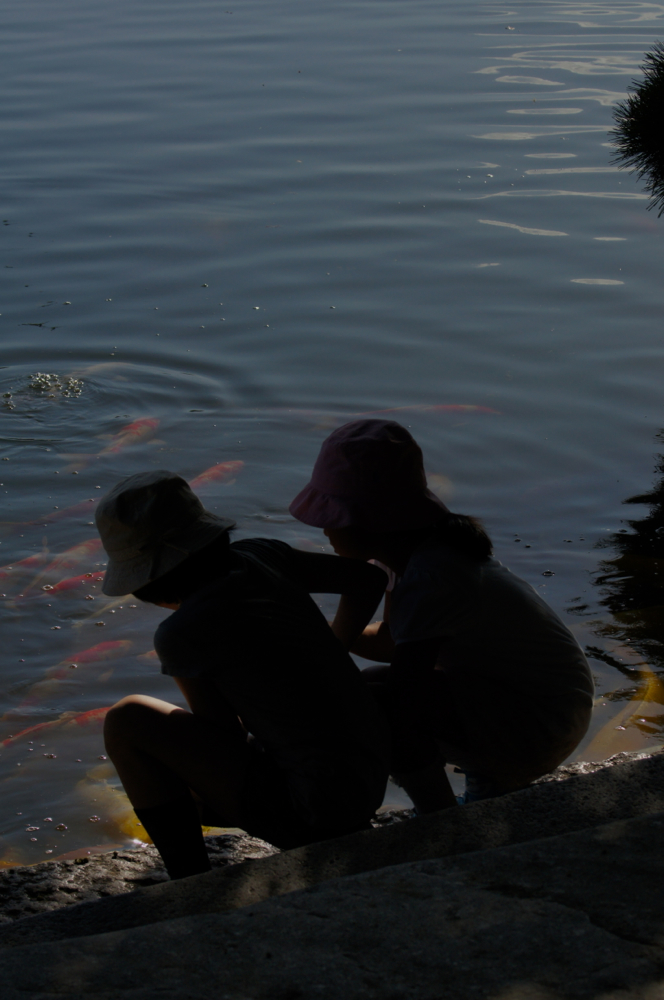
Large multi coloured carp are housed in any space large enough to keep them alive.

Although a UNESCO World Heritage Site since 1995 the village has become overrun with tourists. To maximise this opportunity, the locals have turned their heritage homes into cafes and gift shops and their land into parking lots.

As this is against the UNESCO Charter, Shirakawago risks losing its heritage status.

The UNESCO Charter is about protecting and preserving, not profit.

Over the years we have visited many world heritage sites and they have always been of a consistently high standard, this one wasn’t.

The UNESCO World Heritage Program is one of the most successful organisations run by the United Nations. The Convention Concerning the Protection of the World Cultural and Natural Heritage was adopted in 1972 and has been ratified by 190 state parties. There are only seven countries that have not signed the agreement.

Currently there are 981 sites listed, 759 cultural, 193 natural and 29 mixed. Italy has the greatest number with 49 sites, followed by China, 45 and Spain, 44.

On our final day we walked to the Hida Folk Village, just on the outskirts of Takayama. This is an open air museum and a total contrast to what we had seen the day before. Like Shirakawago, that had many local houses moved to the area, the Hida Folk Village had dwellings from all over the region moved there.

But unlike Shirakawago, there is little commercialism. The area is well maintained and there is an abundance of explanations about what you are seeing.

A highlight of the village was gaining an understanding of how the architecture changed from region to region. This was usually to do with the amount of snow that falls during the winter period.

As we had seen with the Gasshô, or prayer houses, a steeper roof usually indicates a greater snow fall.

Although all these houses were built from timber and prone to burning down, fire was their friend. There was a fire lit in every house we visited and it was explained to us that the smoke repels insects and keeps the ropes in the thatching taught. It is also believed that a fire makes a house a home.

We spent three and a half hours engrossed in exploring this fascinating site.

Apart from a couple of craft shops near the entrance, we were not continually confronted with ‘buying opportunities’.

We did spend 30 Yen (about 30 cents) on food for the fish, swans and ducks of the pond – that was worth every Yen.

As an experience the Hida Folk Village rates very highly and we could see why there is growing criticism of the UNESCO listed Shirakawago Village.

As far as the weather was concerned, this was the best day we had had, so we returned to walk through the old part of Takayama, this time without the gloomy skies.

Just near our hotel the Kajibashi Bridge crosses the Miyagawa River and on either side of the bridge are two very strange bronze statues.

For lack of a better description, having failed to find any information, I have called them ‘Buddha With Long Legs’ and ‘Buddha With Long Arms’.

Lonely Planet describes Takayama as, “…a rarity: a 21st-century city (admittedly a small one) that’s also retained its traditional charm.”


Thunderbirds are go. (October 2013)

October 22nd, 2013

Trains have interesting names in Japan, like Sonic and Whitewing.

The one we took from Kyoto to Kanazawa was called Thunderbird.

There should be one called Typhoon, if there isn’t already, as they seem to be so common in Japan at this time of the year. We have been on the tail end of three so far and now, we are told, there is another one on the way.

Kanazawa means ‘golden marsh’. An apt name considering the region had three centuries of abundant harvests, starting in the the late 16th Century. The luck continued into the 20th century, with the city being spared attack during WW2.

Our first stop was the Omicho Market, just a short walk from the ultra modern, JR railway station. Seafood is the main produce sold in this busy mall like market area. You can even buy freshly shucked oysters from some of the vendors.

As we entered the market I noticed a box of very plump asparagus and wondered where they were grown, considering it wasn’t asparagus season in Japan. They were Australian, from Koo Wee Rup in Victoria.

Not far from the market, between two of the numerous canals, was the Naga-machi Buke District. This is an area famous for a number of Samurai houses that have been preserved. We visited one that was owned by the Nomura family for 12 generations. Nomura Denbei Nobusada was made wealthy during the three centuries of prosperity in Kanazawa. Because of the breakup of the feudal system, at the time of the Meiji Restoration, most of the house was lost, however the garden remained.

Just over the Saigawa River is the Nishi Chaya or Geisha District an area of traditional wooden houses.

The were no Geishas, but that’s not surprising considering it was only 3:30 in the afternoon.

As we were to discover, temples in this area can be more than just a place of worship.

Myoryuji also known as the Ninja Temple was constructed with more than religion in mind.

There were no actual Ninjas living in the temple but it was ingeniously designed so the Shogun, Lord Toshitsune could worship in peace. He built many temples in the area, primarily to house soldiers in case of an attack. If the Shogun was attacked in Myoryuji Temple there was a labyrinth of stairways, hidden rooms, sliding doors, trap doors and even a reported 3km escape tunnel, to Kanazawa Castle, from inside the well.

Within this seemingly small space was 23 rooms and 29 staircases.

There was even a ritual suicide chamber used for committing hari kari, in case he got trapped.

During the Edo period buildings could be no more that three stories high. From the outside this one appears to only have two levels but inside it has four.

Deception, another ‘Ninja’ trick.

This was one of the strangest guided tours I have ever been on.

Firstly we had to sign a form stating that:

  • We understood the tour would be only given in Japanese.
  • We would not talk or translate what the guide was saying into another language as this might break her train of thought.
  • We would follow the guide, on the red carpet, and not disobey her instructions.
  • We wouldn’t take photos.
  • We were not allowed to bring babies or small children into the temple.
  • We could not be drunk.

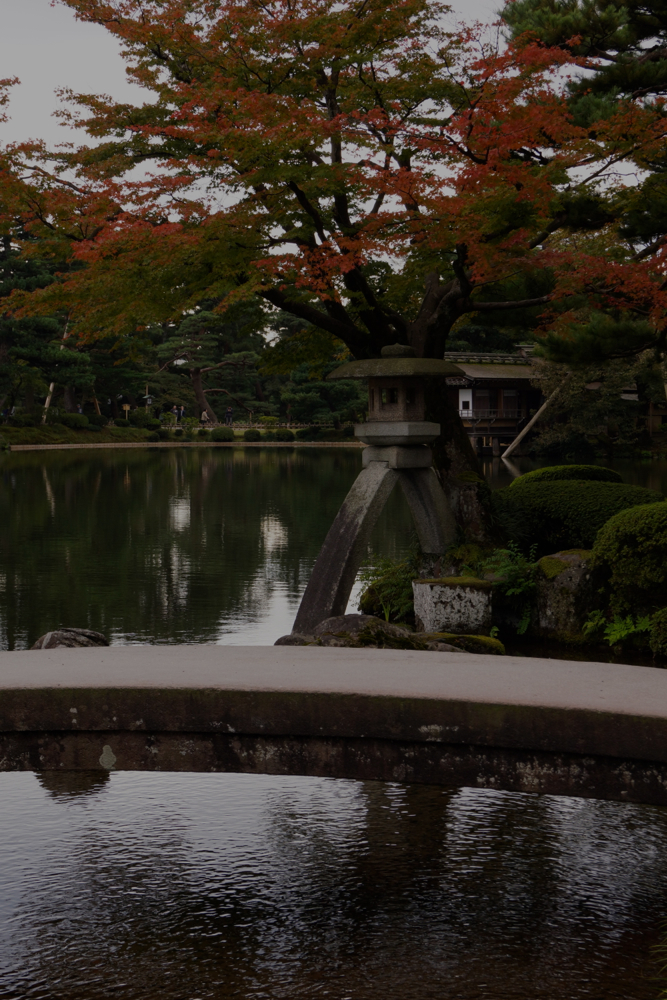
Our only full day in Kanazawa was taken up by a visit to Kanazawa Castle Park and the Kenrokuen Gardens. On the way there we discovered Oyama Jinja Shrine with its delightful pond, criss-crossed with stepping stones and stone walkways.

Kanazawa Castle was destroyed by fire in the 1700 and all that remains is the Ishkawamon Gate. A small section of the castle was rebuilt recently and its reconstruction is ongoing.

There was a free tour of the gardens and our guide was full of interesting facts. He showed us a steep stone staircase and pointed out that the steps were all uneven in height. This, he said, was so that attacking forced couldn’t run up the staircase in full stride.

So much of Japanese history is involved with the Shoguns avoiding death.

Kenrokuen Garden is just over the main road, formerly the castle moat, from the castle park and is regarded as one of the three most beautiful gardens in Japan.

Kenrokuen means ‘garden with six sublimities’ These are spaciousness, seclusion, artifice, antiquity, water-courses and panoramas.

I think that there should be a seventh sublimity, abundance, as the garden has a wealth of bridges, lakes, old trees, hidden views and secluded places.

Kenrokuen is the epitome of a Japanese garden.

The weather in Kyoto was foul
but the day was brighter. (October 2013)

October 20th, 2013

Once in Kyoto we went in search of a new camera.

At Bic Camera we found the Duty Free area, where there was a limited display of Sony Alfa models. We had discovered that this is the place to get the international models, the ones that have an English menu. They did have the a65, this has all the features I need without the bulk of the larger models.

We then waited about 30 minutes until they could find an English speaking sales person.

She was very helpful but had no idea about cameras or photography. I wanted to try my 300mm and 50mm lenses on the new body to see if they were still compatible, but that was way beyond her understanding.

I took a gamble and bought the camera. It was packaged with an 18-50mm lens so that solved one of my issues.

We also got the camera duty free, that’s 5% off and received another 5% discount for using a Visa card.

All-in-all it was a good deal.

Back to the hotel to charge the new camera’s battery, using it would have to wait. Then it was back to the routine of seeing sights.

The Nishiki Food Market and Geisha district were a short distance, by subway, from the hotel.

We explored the food market which is in a covered mall that was at least a kilometer long. These malls are in all the cities we have visited so far. Narrow shopping streets have been covered with an elaborate roof, making them accessible all year round. Each mall has a different roof design.

The Nishiki Market had a huge variety of weird and wonderful Japanese food, much of which we had been lucky enough to try when we were in the Ryokan.

The Geisha district is close to the Takano River and is in a number of narrow back streets full of restaurants, bars and tea houses.

It is said that there are less than 100 Geisha remaining in the Kyoto area and only 1,000 in all of Japan. We did spot, what we believed to be, a genuine one but you are never sure, as many Japanese tourists pay to get dressed up in the style of a Geisha and walk the streets.

There are 17 UNESCO World Heritage Sites in Kyoto, we visited a lot of them.

We had an escorted tour booked for the morning of our first full day in Kyoto and visited Nijo Castle, Golden Pavilion and Kyoto Imperial Palace.

Nijo Castle is a ‘Flatland’ castle built by the Shoguns in 1626 and another UNESCO World Heritage Site. It has magnificent gates and gardens and the interior is open to explore but unfortunately no photography were allowed.

Our guide, another Yuki, gave us interesting anecdotes as she hurried us through the castle.

Tatami mats cover the floors of traditional Japanese homes. These are made of rice straw and about 7cm thick. Made in standard sizes, with the length being twice the width, they are very soft underfoot and because they damage easily, no heavy furniture is ever put on them.

I always believed that the minimalist approach to Japanese interior design was aesthetic, but in fact, it’s practical.

Another of Yuki’s interesting stories relates to the ‘No deciduous tree policy’ of the Shoguns. The traditional Japanese garden, of the Shogun era, only contained pebbles, rocks, water and non deciduous trees. The falling of the autumn leaves reminded them of the transience of life and the fact that their power wasn’t eternal.

Yuki also had an interesting way of distinguishing between the Shoguns and the Emperors. The Emperor, she said, could sleep well at night as his power was supreme and hereditary. While the Shoguns had to sleep lightly, as their power was attained by ‘the sword’ and they never knew when that power could be terminated.

There were wide wooden verandas surrounding the meeting and living areas of Nijo Castle. They were built in such a way that whenever someone walked on them they would chirp to alert the Shogun of intruders. Because of the sound they made they became known as ‘Nightingale floors’.

The Golden Pavilion or Rukuon-ji (Deer Garden Temple). The garden complex is an excellent example of Muromachi period garden design. This period is considered to be a classical age of Japanese garden design. In 1397 it was converted into a Zen Temple and is another UNESCO World Heritage Site.

The Golden Pavilion gets its name from the fact that the entire building is covered in gold foil. It shimmers in the daylight and seems to levitate above the lake that surrounds it. The day was dull and the rain had returned, as we were on the edge of yet another Typhoon, however the temple still shone.

It was also brighter for the fact that I had a new camera to play with.

The final stop on our morning tour was Kyoto Imperial Palace. This is the former ruling palace of the Emperor of Japan. The Palace lost much of its function at the time of the Meiji Restoration in 1869, when the capital moved to Tokyo. This was the period of modernisation for Japan. In 1867 the Shogunate also came to its official end and the power was returned to the Emperor.

On a less historical and more contemporary note, Yuki told us that Nintendo was created in Kyoto. Nintendo Co. Ltd was founded ion 1889 and originally produced handmade hanafuda (playing) cards.

The word ‘Nintendo’ can be roughly translated to mean, “Leave luck to Heaven”

In the afternoon we visited Higashi Hongan-ji and Nishi Hongan-ji.

Higashi Hongan-ji was rebuilt in 1885 after the original temple burned down. It is now undergoing massive renovations, with the entire temple surrounded by a protective structure. This approach to renovation seems common in Japan as we saw it at a number of sites.

Nishi Hongan-ji is a UNESCO World Heritage Site and the other main temple in the east of Kyoto. As with Higashi Hongan-ji, in the west, it was established in 1602 when the Shogun Tokugawa layasu, in order to diminish the power of the Jodo sect, divided the main temple into two.

They are affectionately known in Kyoto as “Dear Mr East” and “Dear Mr. West”.

On our second full day we headed south from Kyoto to Nara, the first ancient capital of Japan from 710 to 784.

Nara Park has four UNESCO World Heritage sites, dating back to the 8th Century.

We visited all of them.

Kofukuji Temple is on the very edge of the park and its five-story pagoda is a symbol of Nara.

Kasuga Taisha Shrine is a beautiful example of the Kasuga style.

Founded in 768 it is situated in the  Kasugayama Primeval Forest, also a UNESCO site, and has 3,000 lanterns within the shrine precinct.

To get a good view of the park and Nara we climbed up to the Nigatsudo Hall, not on the UNESCO list. There were school kids everywhere around the monuments, but especially here.

I think that on any given day half the school kids of Japan are on an excursion, as there are so many not in school.

Finally we visited Todaiji Temple, famous for a massive Vairocana statue, popularly known as the Great Buddha.

The current building was rebuilt in 1709. It is huge, but only two-thirds the size of the one it replaced.

Apart from temples the park is home to 1,200 wild Sika deer who seem to own the place.

They probably do, as they were originally regarded as sacred but are now only considered a ‘National Treasure’.

You can even buy biscuits that are made exclusively for them.

We spent some time on our final day exploring the Kyoto Railway Station.

The current station was opened in 1997 to commemorate the 1,200th anniversary of Kyoto. It’s a vast complex, 238,000 square meters, of shopping malls, movie theaters, hotels, department stores, restaurants, bars and of course the train station. All this is under a 15-story high atrium roof.

It was designed by Hiroshi Hara and is in the ‘Futurist’ style.

The Kyoto Station along with the Kyoto Tower, built 33 years earlier, are controversial structures in a city that prides itself on its traditional cityscape.

The Ryoan-ji Zen Temple was a 20 minute bus ride from the station, towards the north west of Kyoto.

Yet another UNESCO World Heritage Site, the temple is famous for its Zen garden which measures 25 meters by 10 meters. Within the garden are 15 stones that are surrounded by white gravel, which is raked daily.

The only vegetation is moss growing around the stones.

The stones are placed in such a way that you can never see all 15 together, however it is believed that once you have attained enlightenment, you can.

And for something completely different, our final stop was the Kyoto International Manga Museum.

The museum was opened in 2006 and is housed in the former Tatsuike Elementary School. There are over 200,000 books in the collection, including copies dating back to 1862.

There are 40,000 volumes available to be taken down from the shelves and read. These are housed in the Manga Wall which is about 140 meters in length.

People of all ages were sitting around reading their favourite volumes.


A dark day in Okayama. (October 2013)

October 17th, 2013

We arrived in Okayama in the morning, so there was plenty of time to fit in a full afternoon of sightseeing.

Okayama-jo Castle or Ujo, was built in 1597 by Lord Ukita Hideie. It has been nicknamed ‘Ujo’ which means ‘Crow Castle’, due to the black timber weatherboards covering the outer walls.

The present castle was reconstructed in 1966 after the original one was destroyed during WW2.

Japan has done a marvelous job of rebuilding their lost heritage, especially the old Feudal castles.

Inside was an exhibition of old mechanical toys as well as a series of  prints with ambiguous meanings.

The concept of ‘play’ was the theme of the exhibition and that idea was juxtaposed against the modern trend of computer games.

Multi story computer and video game arcades are everywhere in Japan, so it was an interesting social comment.

The castle was a bit disappointing but the exhibition made up for it.

Just over the Asahi River is the Okayama Korakuen Gardens, one of the most famous in Japan.

In 1687, under instruction from the Feudal Lord Ikeda Tsunamasa, Tsuda Nagatada started construction of the gardens.

They still retain their original appearance.

The original garden was called Koen or ‘Back Garden’ as it was built behind Okayama Castle.

It was here at 3:15 pm, in these beautiful surroundings, that my Sony Alpha 55 died.

Although the sun was shining it was a dark day indeed.

After trying unsuccessfully to revive my SLR for most of that night and conducting a heap of Google research, I concluded that the camera’s condition was terminal.

Next day, with my RX100 Compact and a much lighter load, we took a train ride to Sakaide on the Marine Liner and over the Seto-Ohashi Bridge. This is the world’s longest two-tiered bridge and connects Honshu with Shikoku, travelling over five smaller islands. Road traffic is on the top level and the train runs below.

It took ten years to build with construction starting in 1978 and completed in 1988.

It takes about 20 minutes to cross by car or train.

We then took the bus across country to Kurashiki. This gave us an excellent opportunity to see the more rural areas of this part of Japan.

Within walking distance from the Kurashiki Station is the old part of town, known as the Bikan Chiku. This area has been preserved as an outdoor museum and there are restaurants, craft and souvenir shops as well as a number of actual museums.

It was a Sunday, and as we had discovered, the Japanese love to get out and do things on the weekends. The streets were filled with local tourists and the restaurants had crowds lined up at the door.

I have discovered one thing about using a small camera, and that is people have no respect, they are constantly walking in front of you.

When you have something larger, and apparently more impressive, they offer you far more courtesy.

An upside is that they don’t ask you to take a snap of them, or even stand behind you to ‘steal’ your shot.

However I do still need to get another SLR.

8:15 am, August 6, 1945. (October 2013)

October 14th, 2013

We all know our history, but until you have been to Hiroshima the full impact of this date doesn’t become clear.

This is a city of paradoxes.

There is the part that is dedicated to the memory of the A-bomb and then there is the new Hiroshima, a lively cosmopolitan city that has recreated itself with culture, fashion and a contemporary lifestyle.

Yet it remains a city that is committed to peace.

From the ashes of 1945, Hiroshima has used the devastation of that first nuclear attack on mankind and turned it into a feature of the city. Not in a negative way but in a way that promotes world peace and harmony as well as actively encouraging nuclear disarmament.

Hiroshima is built on a delta, so you are constantly crossing rivers to get to the lively centre and the A-bomb memorials and that can be very confusing.

We took two trains to get from Beppu to Hiroshima, the ‘Sonic’ to Kokura and then the ‘Hikari’ Bullet Train.

The ‘magic’ JR Pass, gets you all around Japan on The Bullet Train, plus local trains, like the Sonic, ferries, city tour buses and even a shortcut through Hiroshima Station.

On our first afternoon we visited the A-bomb Dome and then walked through the Memorial Peace Park to the Memorial Mound, Korean A-Bomb Memorial, Cenotaph and the Flame of Peace.

The A-bomb Dome is a UNESCO World Heritage site and is the building that was closest to the epicenter when the bomb exploded 600 meters above it. Remarkably much of the structure survived the blast, considering the entire area around it was flattened.

The building now known as the A-bomb Dome was designed by Czech architect Jan Lethal and completed in 1915.

Opinion, within the Hiroshima community, about what to do with the dome was divided, however in 1966 the council passed a resolution to preserve the remains.

The Memorial Mound has a simple pagoda on the top of a grassy hill. The small shrine next to the mound is filled with with thousands of origami paper cranes, dedicated to Sadako Sasaki.

Exposed to the A-bomb at the age of 2, Sadako contracted leukemia and a decade later died in 1955 at the age of 12.

Sadako was convinced that if she folded 1,000 paper cranes she would survive. She folded far more than that and as the leukemia spread, the cranes got smaller and smaller. In the end she was using a needle to make the folds.

After Sadako’s death her classmates, from the Nobori-cho Elementary School, continued to make this symbol of longevity and happiness. They also started a movement to build the ‘Children’s Peace Monument’. The movement spread to schools across Japan, then worldwide, and by 1958 the monument was built.

The weather again played a part in our decision to visit Miyajima, or Shrine Island, on our second day.

Typhoon Danas had passed and was on its way to China, but rain was forecast for our final day so we thought this might be best spent indoors at the Peace Museum.

Miyajima Island is best known for the 16.6 meters high, bright orange, O-Torii Gate, that seems to float offshore from the Itsukushima Shrine. Another UNESCO World Heritage site the O-Torii Gate is one of the most visited tourist destination in Japan. There have been 8 gates built since the Heian period, (794-1185) this one was constructed in 1875.

We, like thousands of others, spent time walking round the Itsukushima Shrine, there was a wedding taking place and the bride and groom seemed ambivalent towards their many extra ‘guests’.

We then took the Rope-way and funicular to the Misen climbing path and walked to the observatory.

This must be the only chair lift in the world that you need a chair lift to get to. There was a good walk to get to the rope-way and then another tough descent and then an ascent to get to the  Mount Misen Observatory.

It was worth every step, as the views from the top were spectacular. The mountainside is covered with a rich, verdant primeval forest so the views looking down weren’t that shabby either.

Walking to the summit we passed several temples dedicated to Kobo Daishi, a great Buddhist priest. There are statues of his likeness everywhere, many with humorous expressions.

We had been told not to miss a meal of Hiroshima’s specialty, known as Okonomiyaki, a pancake filled with any number of things and topped with different sauces. One of the most popular restaurants serving this dish is Okonomi-mura. It has 26 areas, each serving a different variation of Okonomiyaki.

The sauces used in the restaurant are specially made by Sun Foods.

We then had a nightcap down on the river, overlooking the Peace Park, and walked to the illuminated A-Bomb Dome. Here we met Happy, a 14 year old Corgi, and his owner. Happy walks sometimes but mainly rides on the back of the bike.

Our last day in Hiroshima was dedicated to visiting the Peace Memorial Museum.

Like all good museums it takes you on a journey – a journey of ups and downs, highs and lows, positives and negatives.

I rarely take snaps in museums, as I believe they are artificial places and only give a contrived view of history.

There is an exception to every rule and the sight of Sadako Sasaki’s tiny origami cranes inspired me to try and capture their frailness.

My Sony has come home to die. (October 2013)

October 13th, 2013

Like Salmon swimming upstream to their place of birth, only to spawn and die, my Sony Alpha 55 has returned to the place of its conception, to quietly pass away.

To continue the analogy, it has produced nearly 30,000 images, so it has had a very fruitfull life.

RIP Sony.