Bruce Stainsby's Blog: Muttering from the mo

Kyushu, it’s a game of point and pick.
(October 2013)

October 10th, 2013

Fukuoka.

Breakfast is the one meal of the day we like to keep ‘native’, or at least as close to what we are used to as possible.

The rest of the time we are up for experimentation.

The port city of Fukuoka, on Japan’s Kyushu Island, has offered us a bit of a challenge in this regard, as I like good coffee for breakfast. Our first challenge was finding a cafe that had an espresso machine, as most only serve the American filtered variety.

Eventually we did find Cafe Veloce, a chain of coffee shops that had big chrome espresso machines and, more importantly, staff who could use them.

We arrived in Fukuoka, by ferry from Busan, in the afternoon and after checking into the Hakata Miyako Hotel, which is right next to Hakata Station, we went exploring.

As if we hadn’t had enough of shrines in Korea, our first attraction in Japan was Sumiyoshi Shrine and then Shofukuji Zen Temple. At the temple a monk was hard at work removing grass cutting from the pond after the lawns had been mowed.

We had enough culture and went for a walk along the Naka-gawa River, where we came across the Red Light District of Fukuoka. This has become a trend as we also discovered the ‘Ladies of the Night’ in Busan.

The evening meal on our first day in Japan was yet another enjoyable challenge.

As few restaurants have an English menu, selecting what to order became a game of point and pick. On our second night on Fukuoka we were faced with a menu, entirely written in Japanese, without a picture in sight.

The next day it was back to the shrines, this time we visited Dazaifu Tenmangu and Tenkai Inarisha.

The most impressive was Dazaifu Tenmangu, founded in 905, with its 6,000 Asian Plum trees, bridges and ponds filled with very large, multi coloured Carp. However the most enjoyable was Tenkai Inarisha, with a steep walk up to the Shrine through many bright orange Shinto Gates.

Late in the afternoon we took the subway down to the bay area to see the Fukuoka Dome, built in 1993, and home to the Hawks baseball team. The stadium can hold 38,561 fans and was Japan’s first with a retractable roof.

I had seen it from the ferry, coming into Fukuoka, and believe me it’s a lot more impressive from the sea than the land.

Kumamoto.

The next day we were traveling again, this time it was the Bullet Train to Kumamoto. It was an effortless journey, once we had worked out where the platform was.

Our hotel room wasn’t ready so we headed into Kumamoto to do some site seeing.

When travelling between cities, I carry an iPad and MacBook Air in my camera bag, that’s about 9kg.  It was too heavy to carry around when taking snaps, so I just took my Sony RX100, compact camera into Kumamoto.

This proved to be a test as I didn’t have my normal range of lenses to choose from.

We visited Kumamoto Castle and Hosokawa Mansion, where we kept on meeting a group of US sailors who were on shore leave and doing a bit of sight seeing.

Kumamoto Castle’s history dates back to 1467, when fortifications were established by Ideta Hidenobu.

The castle was besieged in 1877 during the Satsuma Rebellion, and the castle keep and other parts were burned down. In 1960, the castle keep was reconstructed using concrete.

From 1998 to 2008, the castle complex underwent restoration work, during which most of the 17th century structures were rebuilt.

The craftsmanship in the restoration is meticulous. The features of the original castle and palace were copied from artifacts, excavated from the site and then reproduced using the tools of the era. Even the painted screens were copied to perfection.

A walk around the castle grounds, where groups of teenage school children were playing in the parkland, brought us to Hosokawa Mansion. This is the former residence of the Feudal Lord Gyobu. It’s a huge house, measuring 990 square meters, with a labyrinth of verandas, corridors and rooms, all set in a beautifully manicured Japanese garden.

There was no point returning to the hotel, so we took the tourist bus back to the city centre and walked through the Shimotori Arcade.

We found a strange bar that was serving prosciutto, in a Spanish style on a metal rack. We then found ourselves again in a Japanese restaurant, with no English menu, or pictures to guide us. However we did manage to order a delicious meal of salad, grilled beef and an excellent barbecued fish.

We are getting quite good at this.

A visit to Mount Aso was on the agenda and the rain had returned.

It was an interesting train ride from Kumamoto via 2 trains and a bus. One train went on spur-lines and switchbacks and had us continually wondering if we were on the right track.

Aso is reputedly world’s largest Caldera (Caldera means ‘large pan’ in Portuguese) and there is still volcanic activity. In fact the cable car ride, that goes over the volcano, was shut due to a ‘Crater Eruption Warning’.

The Caldera, especially Kusasenri, is a very fertile valley and home to Aso’s famous beef, known as Aka Ushi.

The best way to keep dry, and entertain ourselves, was to spend time in the Aso Volcano Museum. It had interactive displays showing the geology and history of the area. It also had photos of other Calderas around the world. It was then that we realised that we had been to quite a few. Truk Lagoon in Micronesia, Santorini in Greece, Taupo in New Zealand and Mount Teide in Tenerife.

On the train ride back to Kumamoto a chap, with a bulging plastic bag, started offering the passengers sweets. He then produced cold Asahi Beer, also to share around.

The Japanese are very friendly.

Beppu.

Our last stop on Kyushu Island was Beppu, on the north east coast.

Our hotel, was in the centre of the ‘Jugoku Meruri’ or Hells Area of Kannawa Beppu. It’s a series of eight parks or themed entertainment areas.

We visited Umi-Jigoku which had thermal springs, baths and gardens.

Steam is everywhere, gushing from a network of pipes that crisscrosses the park and the entire town.

The park boasts a 3km walking path. We only managed to find a few hundred meters of track as everything else was roped off.

There was a pond and glass house with tropical water lilies and other exotic flowers.

The hills behind Beppo are like a natural, yet artificial environment. The heated subterranean waters creates a tropical climate, in an area that is 33 degrees north of the equator.

We stayed in Kuradaya Ryokan, a traditional Japanese hotel and spa.

Low tables, no chairs, no beds, as we understand them, and you are encouraged to wear your dressing gown or Kimono around the hotel.

Dinner in the Ryokan was as much an experience as a meal.

Yuki Tsubosaka was there to introduce us to the hotel and explained what the schedule was. She was also our hostess for the evening meal. The entire menu was interpreted from Japanese into English, with Yuki constantly referring either to her hand written notes or an electronic dictionary.

We ate in a room, on our own, that was behind sliding doors. This was to be ‘Our room’, for both breakfast and dinner, for the remainder of our stay.

Being behind closed doors was probably a good thing as our chop-stick etiquette wasn’t up to scratch.

Korea, the yin and yang.
Busan and the South East.
(October 2013)

October 4th, 2013

Wet and dry.

On the first day in Busan the weather was beautiful and we took the Haeundae Route of the Busan City Tour from near our hotel. We then changed to the Taejongdae Route and went to Taejongdae Island, where we had a pleasant 5.6 km stroll to the lighthouse and back.

As I have mentioned before, the Koreans love to walk.

Here in Busan, they wear enough kit to climb the Jungfrau, even if they are only going for an easy stroll around a city park. There are dozens of shops, both in the streets, the malls and even in the freeway rest stops, selling shoes, apparel, poles and packs.

The contrast between the modern section, near our hotel, and the older Busan, near the Central Station, is amazing. Busan is obviously a city that has had rapid growth. The older part of town has been left behind and replaced by high rise towers, shopping malls, hotels and an impressive system of bridges and fly-overs.

Even in Busan westerners were in short supply and we only encountered a few groups on our travels around the city. The majority were young Americans here for the Busan International Film Festival (BIFF). Held annually, it is regarded as one of the most significant film festivals in Asia.

It was Saturday and the streets were crowded with day trippers and there was only standing room on the bus for the ride back to Central Station.

There was still light in the sky so we went for another walk, this time around Dongbaok Park, also known as Camelia Park, which was opposite our hotel. By the time we reached the far side the sun had set and the city lights had taken over. We then had a great view of Gwangandaegyo Bridge, the city and the APEC (Asia Pacific Economic Cooperation) building, which was in the foreground.

The next day we were up and out early for a day trip Gyeongju Bulguksa Temple, Seokguram Grotto, Tumuli Park and the Naional Museum.

Our guide, John, was the perfect partner, especially with the holy sites as his understanding of religion was excellent. He was widely travelled and had even spent time living in the Middle East, so his knowledge of all faiths helped to put what we were seeing into an historical perspective.

Gyeongju  Bulguksa Temple is known as the Paradise of Buda and was built by the Silla Kings AD 751-774. The temple was the centre of Silla Buddhism and of prayer for protection against foreign invasion.

It didn’t work, as the temple was burnt down in 1593 by the Japanese.

From 1969 to 1973 it was completely restored and in 1995 it, along with Seokguram Grotto, our next destination, was designated as UNESCO World Heritage sites.

Seokguram Grotto is based on Indian Buddhist grottos and built in 751. Considering its age it’s a marvel of engineering, being constructed entirely of granite, without the use or mortar and with a tolerance between the joints of less than one millimeter.

Then the rains came as we were on-route to Tumuli Park and by the time we were there it was torrential. John was in no way deterred by the change in weather and soon had us trudging through the pouring rain.

Tumuli Park is the ancient burial grounds of Silla Kingdom 500-600AD and there are dozens of these earthen mounds in the park. The larger ones, reserved for important people, have a wood-lined chamber, covered with large river rocks and then encased in earth.

Only two of these tombs have been excavated. Cheonmachong, or the Flying Horse Tomb is 47m in diameter and 12.7m in hight and when opened revealed a wealth of artifacts for the King to take to the ‘next life’.

Our final stop on a long day was the National Museum where many of the artifacts from the Cheonmachong Tomb are kept.

Soaked to the skin, and leaving watery footprints wherever we went, we raced through the museum visiting only the essential exhibits.

It was then back on the bus and back to the hotel to try and dry out.

Monday was spent drying our saturated clothes from the Sunday tour and a walk around Busan. This included the Zenith Towers, a three tower residential block, with the ‘Premium Brands’ section. This will soon become a samples and seconds retail outlet as no one was there and half of the shops had already closed.

Continuing our stroll and with an eye on the darkening sky we discovered the Sooyoungro Presbyterian Church, an excellent example of contemporary church architecture.

Our final stop was the Shinsegae Department Store.

We had been told that it’s the world’s largest and once we were inside we could see why. There were five or six floors of shopping opportunities, with fashion, food, cosmetics, an ice rink and a floor devoted entirely to hiking gear.

On our last day in Busan the skies cleared for our trip to Junam Wetland Park and Haeinsa Temple. John was again our guide.

The Junam Wetland Park is the largest natural wetland in Korea. It consists of four swamps with a total area of 602 hectare.

This is a tourist bonanza for the area so the government pays the local farmers to grow rice to feed the birds.

Ironically it has to import rice to feed the people.

It’s a haven for migratory birds with 10,000 – 20,000 arriving daily in winter and 5,000 – 6,000 in summer. The birds migrate from Siberia and the ducks and swans are huge. They are the A380s of the bird world and obviously too well fed on free Korean rice.

John said, “You have visited the Paradise of Buda at Bulguksa Temple, now you have seen the Paradise of Birds at Junam Wetland.”

It was a long drive to Haeinsa Temple and we noticed just how mountainous Korea is, with every piece of flat land being occupied with either agriculture or industry. The thousands of high rise apartment blocks, that are part of every city, are squeezed up against the mountain sides.

Haeinsa Temple is built near a fast flowing river, with the water tumbling over giant boulders on its way to the valley below.

It is interesting that the Christians built their churches on the highest point, to be closer to their god, while the Buddhists built their temples in the mountains to be closer to nature.

There was a local festival and the streets to the temple were lined with stalls selling food and herbal treatments. There was also an art festival, the Haein Art Project, with sculptures and installations throughout the temple grounds.

One of the main features of Haeinsa Temple is the Tripitaka Koreana, a registered UNESCO World Heritage site. Housed in four buildings are three collections of Buddhist Scriptures, dating from the 13th Century. There are 81,350 carved wooden blocks, made from naturally treated pine and wild cherry wood.

They are protected from insects and vermin by layers of salt, charcoal, powdered lime and sand, that are 3 meters deep. The building is also totally ventilated, on all sides, to allow for a natural flow of air, again to protect the wooden tablets.

The other temple buildings are decorated, both inside and out, with paintings telling stories of life, enlightenment as allegory. In many ways they are similar to the Painted Monasteries of Moldavia in Romania, that we visited last year.

John was telling one story about Man’s journey through life. It shows an elephant running away from the fire and as a result of the rampaging beast Man jumps out of harms-way, only to find himself is a worse predicament. He is clinging to a vine, above him rats are chewing through it, while below, a pit full of snakes are waiting for him to drop.

There is a bee hive, dripping honey, above Man’s head and while he is in mortal danger, he still can’t resist the pleasure of the sweet nectar.

Life, death, pleasure, pain. More yin-yang.


Korea, the yin and yang.
Jeonju and Jirisan National Park. (September 2013)

October 2nd, 2013

Good and bad.

Having almost missed the train to Jeonju and Jirisan National Park – bad, the tour company shouted us dinner in Jeonju and breakfast in Jirisan as compensation – good.

Very few westerners travel in this part of Korea so we were lucky to have an excellent guide, Chulwoong, to show us the way.

Chulwoong loved to walk and talk so, over 3 days we spent many pleasant hours hiking in the mountains and exploring the numerous temples and small towns in the region.

Close to Jeonju is Han-ok Village a traditional Korean township or ‘Slow Town’ as they are known. In Han-ok we walk through the village, had tea in a traditional tea house and marvelled at the craftsmanship of the new traditional Korean buildings being constructed.

“Tradition” is a word you hear a lot in Korea, as maintaining the old ways is very important to them.

We also met a group of photographers who were travelling around the area, snapping everything in site, so they could sell prints in the city.

The fisrt sign of the big Christian community, over 40% of the Korean population is Christian, was the large Catholic Cathedral in Han-ok Village. At night you can see many crosses illuminating the sky around the Jeonju area, especially from the lookout behind the town. Climbing there was good exercise after our gratis Korean dinner.

From then on we weren’t surprised to see churches everywhere in south.

The following day Chulwoong drove us to Baegyangsa Temple, built in 632 as the head temple of the Jogye Order of Korean Buddhism. The temple, with its craggy mountain backdrop, is near a river and along its banks the red Korean Lilies were in full bloom.

Interestingly, the local tourists were there as much for the flowers, as the temple.

From there we went to Seonunsan Temple and Seonunsan Provincial Park. They were setting up for a local festival and there were hundreds of colorful ‘Wishing Lanterns’ hanging from a large metal frame.

We again had tea. This one, served in a pavilion by the temple, was provided free by local volunteers, however we did give a small donation to show our appreciation.

The Koreans love to walk and in Seonunsan Provincial Park we were accompanied by hundreds of hikers. They had come down from Seoul by the coach load and walked for three or four hours then headed back to the city.

Finally we made a slight diversion to the west coast to see the tidal flats and the Samyangsa Salt Paddies, where we caught up again with the professional photographers we had met in Han-ok Village.

They were still madly snapping away.

We then travelled, from west to east, through the mountains and over the valleys to Jirisan.

The road system, especially the mountain tunnels and viaducts, are a match for any of those found in Europe.

And just like in Europe, you are constantly being passed at high speed by black and silver sedans and SUVs, however they aren’t Mercs, BMWs or Audis, that race past, but Hyundais, Kias and SsangYongs.

However, unlike Europe and a lot like Australia, they will pass you on either side.

After overnighting at Hanwha Resort we walked to the peak of Mount Nogodan, 1507m, in Jirisan National Park.

Over the last 10 years the government has replanted the vegetation and it’s now returned to a more original state. Tourists can only access the peak for five hours a day and they close it completely during winter.

There were walkers of all ages, from primary school children to retirees.

After 3.5 hours walking in the mountains we discovered Caffe Bene and had the best coffee of the entire trip – so far.

It was then back onto the freeway and off to Busan, a regional port and resort city in the south east of the peninsula.


Korea, the yin and yang.
Seoul and Hwaseong Haenggung.
(September 2013)

September 30th, 2013

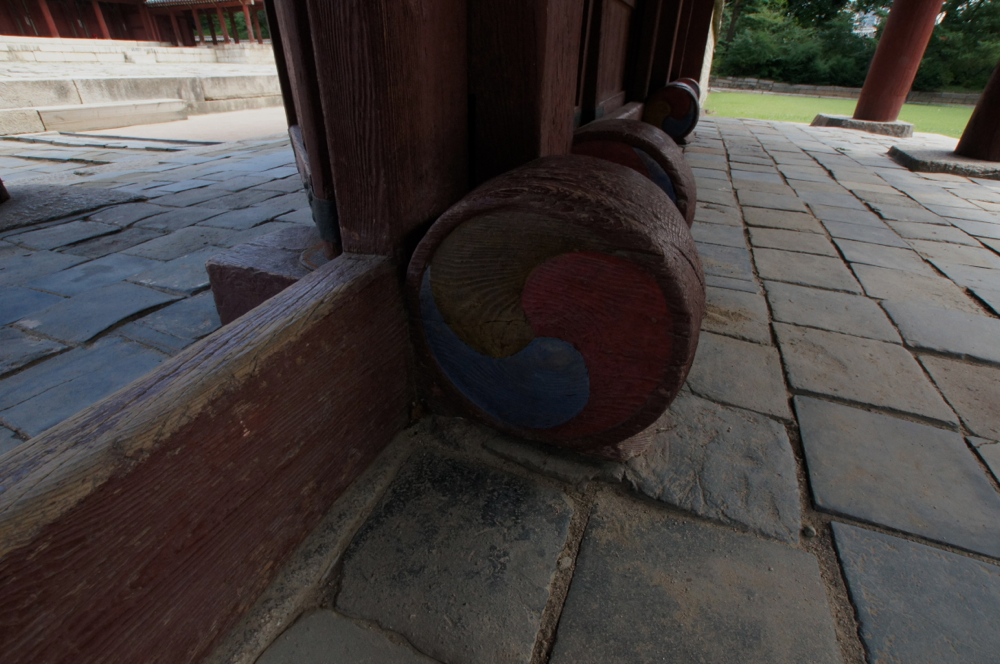
The concept of yin-yang is used to describe how seemingly opposite or contrary forces are interconnected and interdependent in the natural world and yet interrelate to one another.

That perfectly describes Korea.

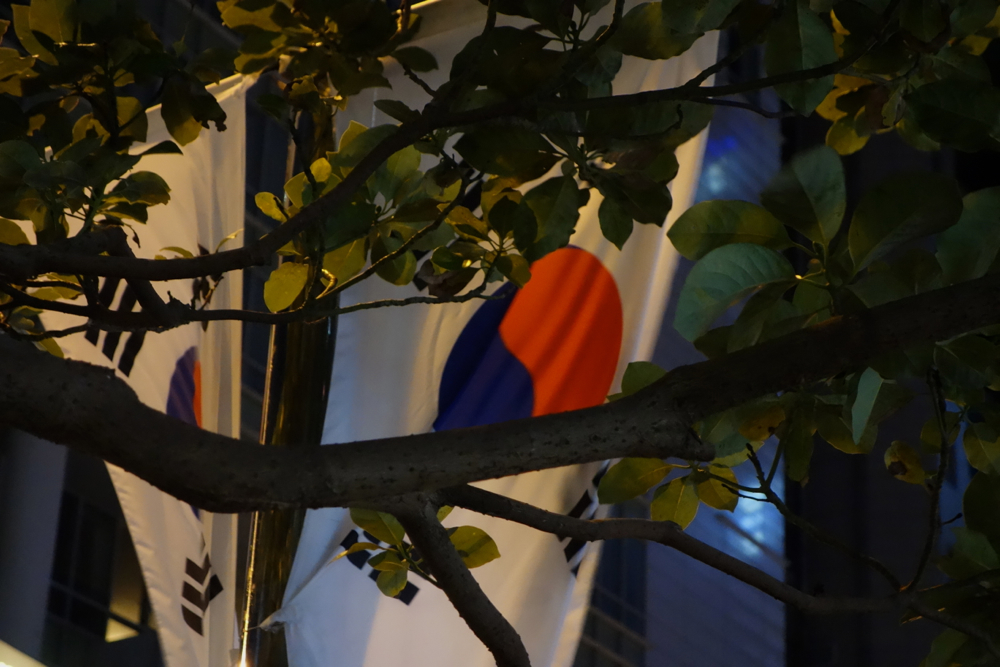
It’s therefore no wonder that the Korean flag uses yin-yang to symbolise balance within the country and its people.

Black and white, night and day, male and female, red and green, old and new.

Opposites is what South Korea is all about, especially when you consider the difference between the North and South.

Seoul is also a city of contrasts. You often see an old Korean palace, from the 17th Century, set against a backdrop of a towering steel and glass skyscraper.

It’s hard to find a rubbish bin yet the streets are free from litter.

We arrived as the Mid-Autumn Festival was in full swing in the streets around our hotel in the Insadong area. The Hotel Sunbee is well located and close to the palaces, restaurants, bars and the Metro.

On our first full day we took the ‘Hop-on-hop-off’ bus tour to get a good perspective of the city. It rained in the late afternoon so we didn’t do too much ‘hopping off’. On the two occasions that we did get off the bus we visited Gyeongbokgung Palace, first built in 1395 and then reconstructed in 1867, and Gwanghwamun Gate and stood beneath the impressive statue of King Sejong the Great, 1397-1450. At Gyeongbokgung Palace we bought a ‘Combination Ticket’ which gave us access to five sites.

The following day we visited Jongmyo Shrine, built in 1394 and now a UNESCO World Heritage site. We arrived just in time for the English guided tour. From there we walked along Cheonggyecheon or ‘The Stream’, an artery of life set below the madness of the city streets.

Contemporary architecture is a feature of Seoul and there is no better example than the new City Hall. This is literarily ‘New Wave’ architecture and when you see it set against the Old City Hall you can see how well the old and new complement each other.

More yin-yang.

Later that afternoon we arrived at Deokstgung, one of the Five Grand Palaces built by the kings of the Joseon Dynasty. This time, we were just in time, for the changing of the guard, a colorful display of  command shouting, drum pounding and band marching. The palace was a little more subdued with beautifully crafted traditional Korean architecture and and a quaint, western inspired, pavilion designed by a Russian architect at the turn of the last century.

The following morning we had a guided tour arranged and visited the Korean Folk Village at Hwaseong Haenggung and then travelled a few minutes down the road to Suwon Hwaseong Fortress.

The Korean Folk Village is as much a film set as a museum as many of the famous Korean historical dramas are shot here.

It’s also a great place to bring bus loads of Korean school kids for an outing. There were hundreds of them, all in their brightly coloured uniforms, having a wonderful time. When it came to lunchtime they all sat in neat rows and quietly ate their meal.

The Fortress was built to protect the main city and originally ran for kilometers around it, now there is only a small section remaining.

The next day we visited the Secret Garden at Changdeokgung Palace, another UNESCO World Heritage site and also built by the kings of the Joseon Dynasty (1392-1897). Unfortunately it rained again and we had to shelter under the very wide eaves of the garden buildings as we moved around. It continued raining as we moved from the garden to the palace but at least there was a bit more shelter there.

We went to find a shopping mall but instead discovered Seoul Central Railway Station built in 1927 and with many similarities to Flinders Street Station, built 73 years earlier. Inside we discovered an avant-garde typographic exhibition, ‘Typojanchi 2013’, with three floors of exhibits covering 50 years of experimental typography.

On our final morning, after a stuff up with our hotel transfer we managed to get to Yongsan Station with just a minute to spare, for our high speed train ride to Jeonju in the south west.

But even that had its upside.

Hong Kong hasn’t lost its charm. (September 2013)

September 24th, 2013

The last time I was in ‘Honkers’ was back in 1979 and the Brits still owned the place.

Despite the change of landlord the number plates are still very British and the currency is still the Hong Kong Dollar.

Neon signs are now bigger and brighter and with the change in technology there’s now a giant plasma TV on every corner.

The Mid-Autumn Festival provided us with even more lights.

We went to Victoria Park where thousands queued patiently to visit the ‘Rising Moon.’ This 10 meter high light sculpture was made from recycled water bottles and changed colour to the rhythm of the accompanying music.

There have always been sky scrapers in Hong Kong, especially the apartment blocks that cling bravely to the coastline along the harbor. Now there are a few more larger ones showing off the Chinese love of stunning contemporary architecture. Unfortunately these have been built at the expense of the old Colonial buildings, that are now even harder to find.

The people are as friendly as ever and always willing to redirect a lost tourist. While most of the ‘Hard Yakka’ is still done by hand.

Transport is even more efficient now, with the introduction of the Octopus Card – it’s a Myki that actually works. The Star Ferry hasn’t changed since 1979, in fact I think that the same boats are still operating and run by the same old salty staff.

The taxi service is also a relic from last century and runs entirely with a fleet of Toyota Crown Comforts, again straight from the 1970s.

We did the usual Star Ferry crossing from Kowloon to Hong Kong Island and took the tram up to Victoria Peak. Here we did notice a change, the tram has been upgraded and the tourist centre on Victoria Peak, Peak Towers, is now a new chrome and glass complex. It was refurbished in 2006 and offers 360 degree views around the island.

As part of our ‘Rediscovering Hong Kong Adventure’ we walked around the Sheung Wan district. This is one of the oldest parts of the island and where the British first settled. There we found the Man Mo Temple, built in 1847 and, unfortunately for us, undergoing major renovations. Even here bamboo is still the preferred material for scaffolding.

On our final day we did the ‘Family Walk’ on Lamma Island from Yung Shue Wan to Sok Kwu Wan. Sadly the power station was our constant companion on the climb out of Yung Shue Wan.

The biggest change however was in the number of signs telling you what and what not to do. They were everywhere, on the beaches, parks, streets, monuments and transport, warning you of the dire consequences of running foul of the local authorities.

However, in their own charming way, the residents of Hong Kong managed to ignore them all.


The church and I don’t normally agree.

September 4th, 2013

I am an agnostic and it’s my belief that a dogmatic adherence to religion has been one of the biggest encumbrances to human harmony since faith became organised.

However this poster, hanging on the facade of St Paul’s Cathedral in Melbourne, struck a chord.

It’s a direct reaction to the politicisation of refugees seeking asylum in Australia.

Both sides of politics, in an attempt to win favor with the electorate, have demonised people escaping the horrors of war, famine and persecution.

They aren’t criminals, they are just people trying to make a better life for themselves and their families.

The United Nations High Commission for Refugee (UNHCR) reports that there are currently 45 million refugees worldwide. This year people arriving in Australia, to claim asylum, rose to 15,800 people. That, according to UNHCR, is about 3% of the total asylum claims made in the industrialised world.

The politicised fear of immigrants in Australia isn’t new.

The Chinese were welcomed in the gold fields in the 1850s, until the gold ran out, and then they were sent packing. In the late 1940s the Ten Quid Poms, although sponsored by the government, were despised by the average Aussie, who believed they would take their jobs. Then there were the original ‘Boat People’ – the refugees from the Vietnam War who came here in the late 1970s.

With the civil war in Syria and sectarian violence in Egypt, the flood of refugees will continue.

It’s about time both sides of politics developed a bipartisan policy to welcome these people rather than ostracise them.

I agree, Australia can do better than this.

I’m not a bird-watcher, well not normally.

August 12th, 2013

I have just had the sensor cleaned on my DSLR and was taking a few test snaps along the Hampton foreshore.

It was a warm winter’s day and this Black-shouldered Kite was looking for lunch. Moments later it dived into the bush and then came away with something small and furry. Apparently mouse is their preferred cuisine.

Good hunting by the Kite and good fortune for me.

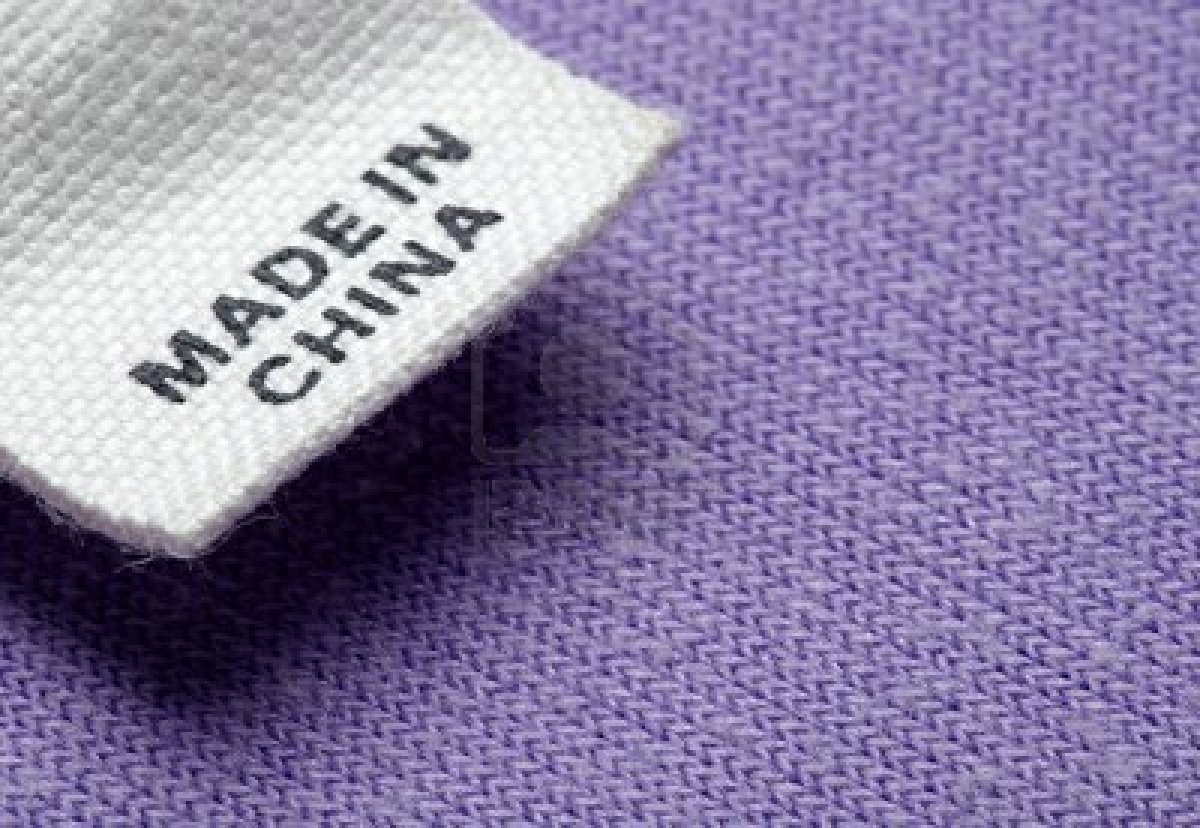
Made in China.

August 1st, 2013

When I was growing up in the 50s, we scoffed at products that were ‘Made in Japan’.

They were seen as massed produced, poor quality copies of quality goods made in the UK, Europe or the US.

Over the last 50 years that has all changed.

Japan’s manufacturing industries developed the intellectual and engineering skills to become world leaders in automotive, computers and consumer electronics.

Their companies now compete on every level with the products they originally copied.

Japan is home to six of the top ten largest vehicle manufacturers. In fact the top selling luxury car in the US, is Lexus.

With a population of over 1.3 billion people and an ever increasing middle class, the growth of Chinese manufacturing has been fueled by internal consumption.

Owning a car, TV or mobile phone has been a priority. The quality of these new possessions hasn’t been that important.

Now internal consumption in China has slowed and manufacturers are looking abroad to expand their markets. They will soon realise that quality is just as important as price to these new overseas consumers.

Many Apple products are ‘Designed in California’ but ‘Made in China’ so it won’t be that long before the Chinese learn how to design as well as make desirable consumer products.

Once that happens we may be soon proudly driving our new ‘Made in China’ luxury car.


Le Tour. There’s only one winner.

July 22nd, 2013

It’s been another 3 weeks of staying up late watching the Tour de France.

This is its 100th anniversary.

The countryside was constantly changing, as they moved from Corsica, through the Riviera, the Pyrenees, Brittany, the Alps and then on to Paris.

Unfortunately the ads, unlike the views, all had a boring similarity.

Except for one charminmg little spot for H&R Block, Tax Accountants.

It was simple. Two guys on their bikes.

It was relevant. Two guys on their bikes.

And it dramatised the proposition. Two guys on their bike with one making complex stuff look really simple.

My bertet goes off to Us Sydney, who created the spot and Plaza Films who produced it.

Vivian Maier.

July 2nd, 2013

Pete Coles, a friend of ours from the UK, sent us a link to the website of an obscure American Street Photographer.

Vivian Maier (1926 – 2009) was born in New York to a French mother and Austrian father. She spent her early years in France and started taking photos on a Kodak Brownie box camera. On returning to New York in 1952 Vivian purchased a Rolleiflex, square format camera and her photography blossomed.

Many of her photos feature portraits of the urban poor, shot in a manner that is strangly contemporary, especially for post war America.

She supported herself as a nanny in New York and Chicago but her passion was photography. Everywhere she went she would obsessively take photos, most of which were never printed or even developed.

She kept her photos in storage and the negatives were eventually sold off in 2007 because of a non-payment of rent.

John Maloof was one of several collectors who purchased her work. He discovered over 100,000 images in black and white and colour, plus 8mm film and a large collection of her memorabilia. You can read her story and see some of her amazing photographs on vivianmaier.com.