Bruce Stainsby's Blog: Muttering from the mo

Cropping out the unnecessary. (April 2012)

April 11th, 2012

I like to show places or locals, rather than tourists, in most of my snaps.

That was relatively easy in Dubai, Egypt and Jordan where, unfortunately for the locals, there was hardly a tourist in sight.

It’s very different in Istanbul.

Tourists are everywhere and getting clear, people free, shots is a lot more difficult, especially in Topkapi and Dolmabahçe Palaces.

I will just have to be a bit more inventive in my cropping or find a way to make tourists look more interesting.

KISS.

April 10th, 2012

The Keep It Simple Stupid strategy should have been adopted by the Victorian administration when they were deciding on a transport ticketing system.

Having just spent a week traveling around Istanbul I wonder why the Myki system has cost so much and been so long in coming.

In Istanbul every fare costs 2 Tukish Lire (AU$1), no matter where you travel or on what mode of transport you choose to use around the city.

They have trams, trains, busses, ferries and an underground.

You just buy a token from a machine and that’s it. This is brilliant for the tens of thousands of tourists that visit Istanbul each year.

There is also a pass system for the everyday commuter and this seems to work without a hitch.

There are no teams of Met Gorillas patrolling trams tops and stations, just one guy at each barrier. He is there to stop people sneaking through and more importantly, to help.

The system is simple and effective.

It works so well because of one ‘simple’ fact. You can’t get onto anything without first passing through a barrier and swiping your card or putting a token in the slot.

Simple.

More west than east. (April 2012)

April 5th, 2012

It’s been 40 years since I first visited Istanbul. I remember it being very mysterious and very ‘Eastern’

A lot has changed and it’s now a modern city.

The taxis have meters, built into the rear view mirrors, while silent articulated trams efficiently move commuters through the clean well maintained streets.

The pudding shop is a restaurant. It still serves the hippies from the seventies but, like me, they have shorter hair, cleaner clothes and are now in their sixties.

Istanbul seems to have become more western, yet minarets dominate the skyline and the muezzin is still heard calling the Muslims to prayer, albeit over a high decibel PA system.

I did find a little bit of the eastern influence and surprisingly it was in a restaurant.

Turkey is a secular society, so wine is acceptable and readily available. We ordered a bottle of the local Sauvignon Blanc and were surprised to find we could haggle with the waiter over the price.

At last I have found the eastern influence in Istanbul.


TGIF. (March 2012)

March 31st, 2012

Another Friday and the Muslim day of rest.

As we are on the Dead Sea, we decided to slum it and spend the afternoon at the Mövenpick Resort.

The therapeutic benefits of the Dead Sea are well known so most people were there to float on its salty waters and encrust themselves in its mud.

The Dead Sea water has a salt concentration of 31% so swimming is out of the question. You just lie back, relax and let the water do the rest.

Daylight saving has just started in Jordan so the afternoon was long and the sunset over Israel seemed to last forever.

I need a wider lens. (March 2012)

March 30th, 2012

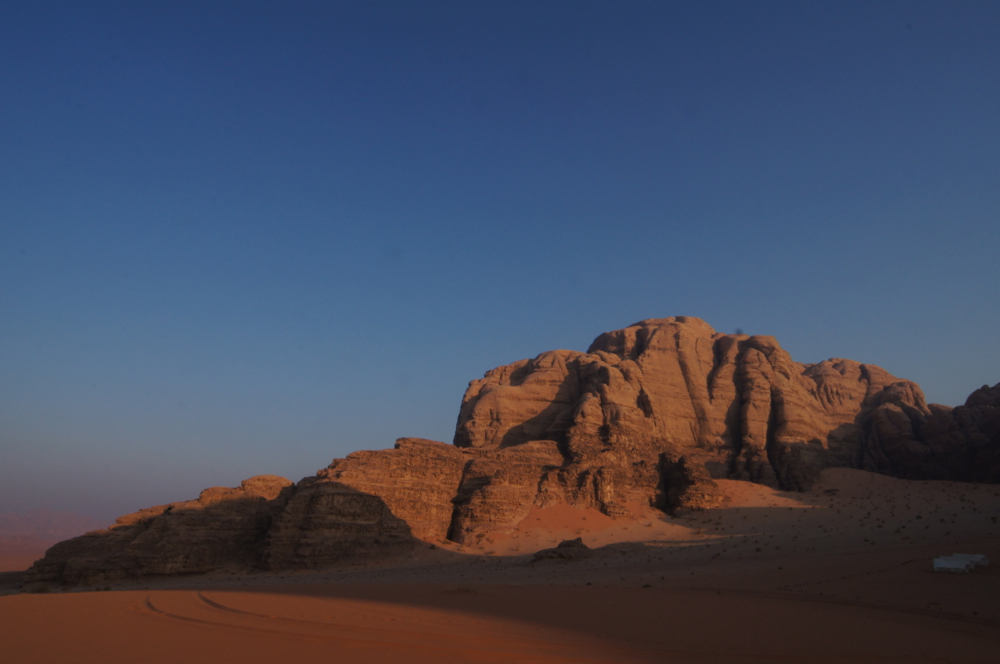
My 12-24mm wide angle lens has always been more than adequate for a variety of locations.

That’s until Wadi Rum.

There the massive sandstone mountains seemed to tower so high above me, that I was continually checking to see if the lens was at its widest angle.


Sound and light at Petra. (March 2012)

March 30th, 2012

The simplicity was overwhelming.

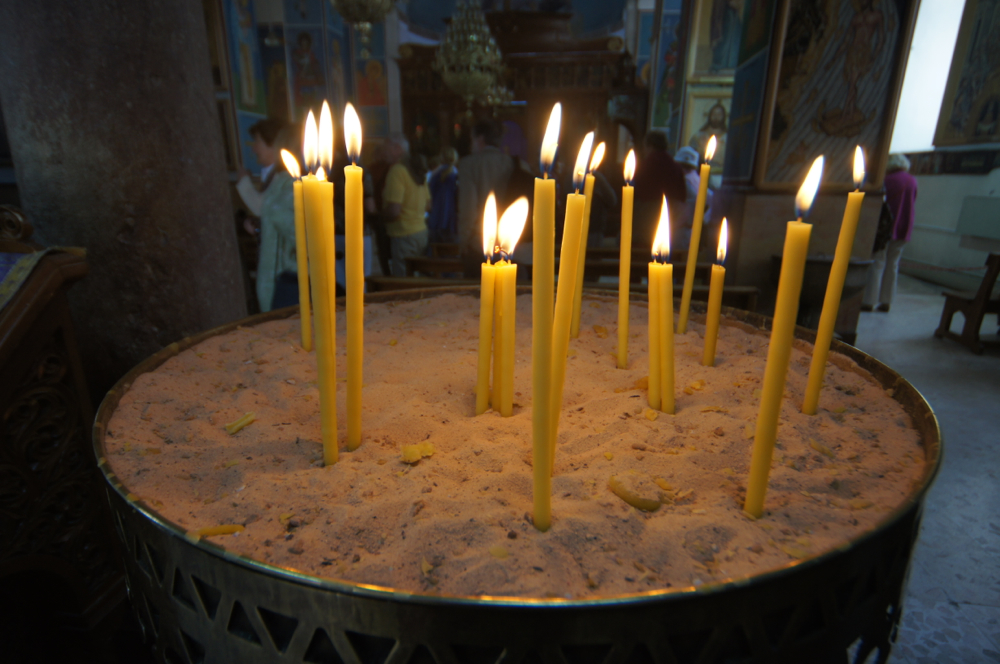
Candles, two musicians and a monologue.

The Bedouin delivering the ten minute narration asked us, in the words of John Lennon, to imagine.

Imagine Petra as it was 2,000 years ago.

Imagine the water flowing through viaducts, down the gorge and bubbling up through the nymphaeum in the Roman colonnade.

Imagine caravans, laden with gold, frankincense and myrrh, passing through this ancient city from the exotic east to the Mediterranean coast in the west.

Imagine the streets, palaces and tombs lit by 8,000 olive oil lamps.

And then finally, imagine what the people were like who could conceive and build this amazing place.

This was far more moving than the over produced, over scripted and contrived Son et Lumière that you’ll find at most tourist destinations.


The Nabataeans. (March 2012)

March 30th, 2012

I have long lived under the belief that Petra was built in the classical Graeco-Roman style.

The Corinthian columns, triangular pediments and relief sculptures are all features from that architectural period.

It’s easy to understand why when the building, most featured, in the tourist guides, is Al-Khazneh or The Treasury.

It’s only when you spend some time exploring, and reading, that you discover what an amazing civilization the Nebataeans were.

Having found an almost impenetrable river gorge on the main spice route between the east and west they then taxed all the caravans that passed though. They used the wealth gained from the caravans trade to carve out a city from the surrounding sandstone mountains.

The Nabataeans were a sponge of civilizations, soaking up architectural and social influences from the Mesopotamians, Egyptians, Greeks and Romans.

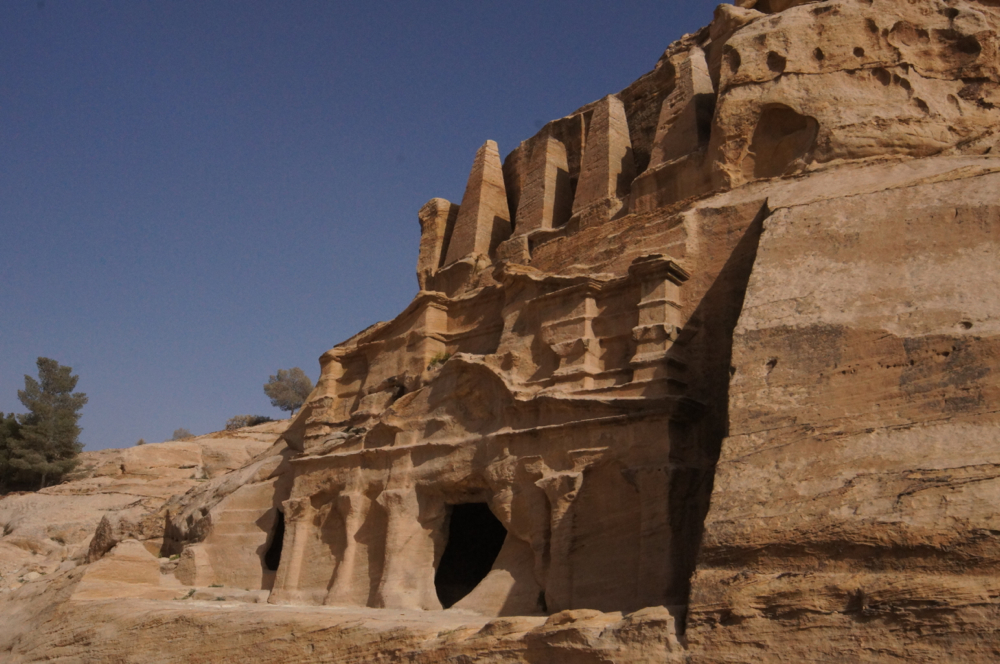
All these styles can be found in some of the lesser known buildings and tombs. The Obelisk Tomb, with four pyramid shaped needles, is clearly influenced by ancient Egypt.

They also developed some original styles of their own.

The Nabataeans created a place that is unique, by borrowing from the greatness of other cultures and then adapting it to their own specific needs.

That’s true creativity.


Saladin showing off. (March 2012)

March 30th, 2012

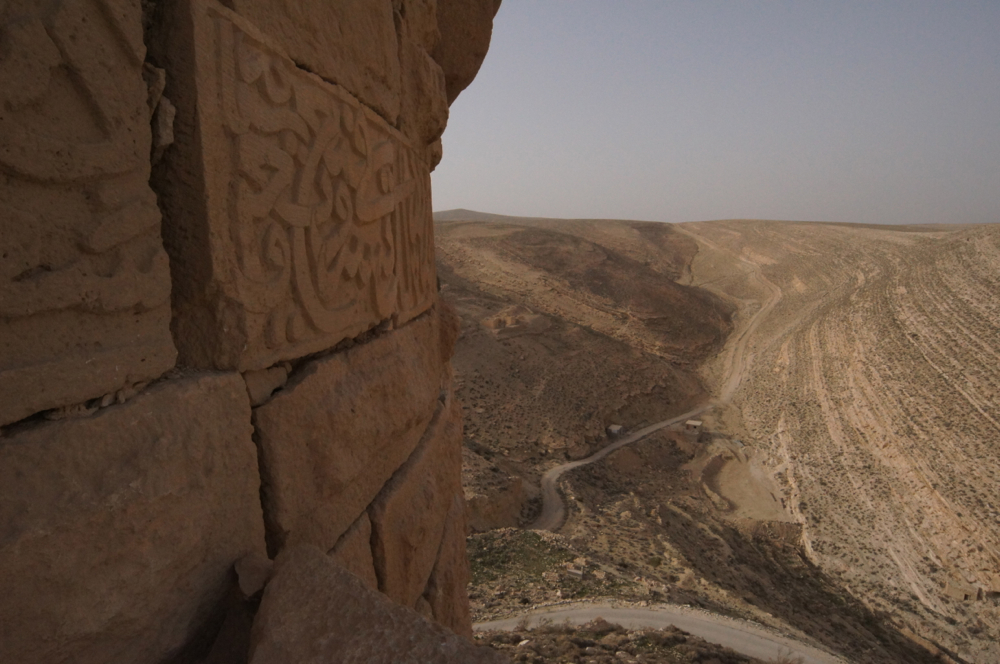
On the road trip from Amman to Petra we encountered another castle at Ash-Shawbak. There are at least 5 spelling variations of this name.

This one was built high on a mountain by the Crusaders.

There are so many tunnels, stairways and hidden rooms that it’s easy to get lost.

It was only 75 years before the castle fell to the armies of Saladin. He boasts this fact with an Arabic inscription carved in relief above the entrance.

Al-Hussein Park. (March 2012)

March 30th, 2012

Friday is the Muslim day of rest and for the people of Amman, what better place to spend it than at Al-Hussein Park with family and friends.

It has become a ritual for us, that’s if two weeks in a row is a ritual, to find a park on the weekend and observe the locals at play.

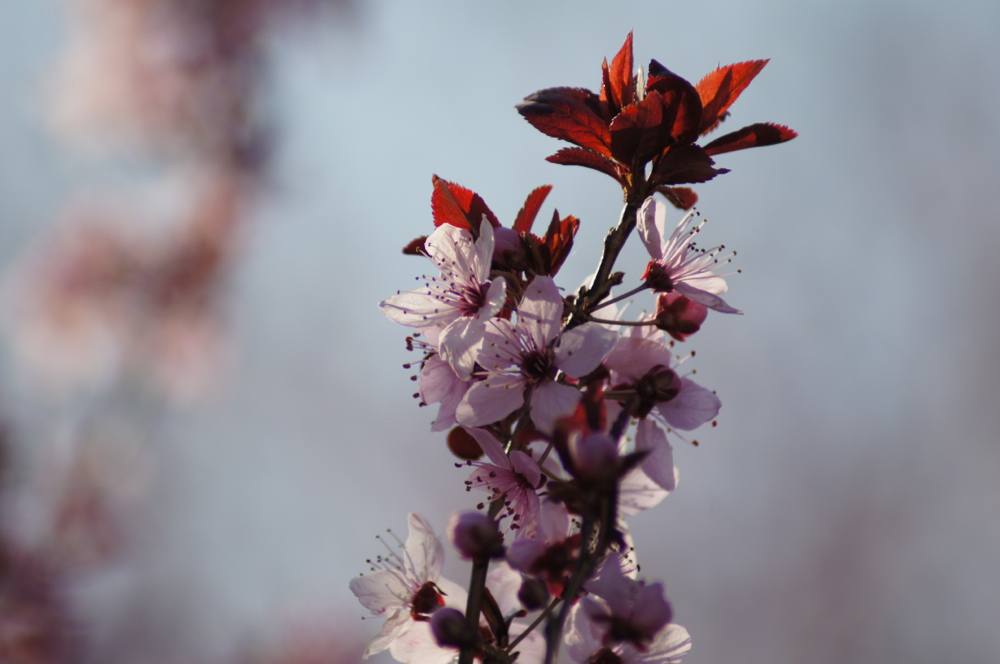
What made this day even more special was that spring was definitely in the air. After an unseasonably cold spell for Amman, the weather was warming up.


Are you a Christian?

March 30th, 2012

Today was our biblical interlude in Jordan.

We visited Madaba, Mount Nebo and Bethany Beyond Jordan.

Madaba contains an amazing 6th century Byzantine mosaic of the Christian’s holy sites, east and west of the Dead Sea. There are only fragments left and photographs don’t do it justice.

Mount Nebo overlooks Israel and the Dead Sea and is supposedly the site where Moses met his maker.

While Bethany Beyond Jordan is apparently the part of the Jordan River where John became the Baptist.

The electronic guided tour, that you are forced to take, is aimed at the devout believer. The language and accompanying sound effects are a total oversell of what is actually there.

It’s no longer the Garden of Eden.

The mighty Jordan River isn’t what it used to be in biblical, or even recent, times and has dropped about 5 meters in the last 50 years.

Its muddy colour now resembles the Yarra after heavy rain.

I was asked by one of the local guides if I was a Christian, I replied that no, I was an historian.

He seemed happy with that response.