Since our return from Europe and more recently South Korea and Japan, we have decided to catch up on some of the TV series we missed in 2012.
Not surprisingly one series I have always enjoyed is Mad Men, a period drama about the New York advertising industry in the 1960s’.
New York was at the centre of what was called the Creative Revolution during these halcyon years.
The ad agency Doyle Dane Bernbach (DDB) developed ground breaking campaigns for clients like Volkswagen and Avis during this time.
Mad Men was created and produced by Matthew Weiner, an exceptional screen writer who was also involved in the highly acclaimed HBO series The Sopranos.
Having been inducted into advertising at the end of that amazing era and being a student of the ads of that period, I was intrigued as to how Weiner got his material.
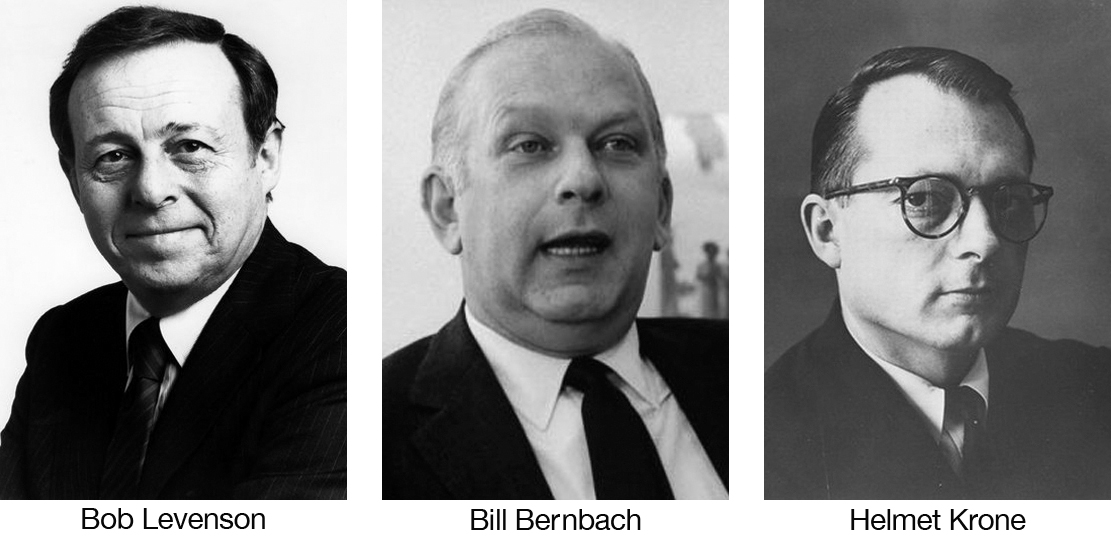
It turns out that one of his main consultants was Bob Levenson, a veteran ad man from DDB. Levenson, together with Bill Bernbach and art director Helmet Krone produced some of the most well know and enduring campaigns of this golden age.
It’s not surprising that Mad Men has become such a hit, as it offers the viewer a real insight into the lives, work, frustrations, faults and foibles of the men and women of Madison Avenue in the 1960s.







The death of the written word.
Sunday, May 19th, 2013I no longer buy a hard copy of newspapers but prefer to read them online. They’re portable, easy to read and have high quality resolution for the graphics and photos.
In many ways they’re far superior to the printed versions.
However many of the online news and editorial articles are increasingly containing video. In fact one of our local Melbourne newspapers, The Age, is becoming more of a TV station than a newspaper.
Audio books are also on the increase and now Google has announced that their primary mode of search will be voice activated not written.
The result of this visualisation of content is that many people will prefer to have their news and information read to them rather than reading it for themselves.
When I was a kid I loved having books read to me but I only got to really appreciate the joy of literature when I started to read them for myself.
It was my voice, in my head, interpreting the words and filling in the gaps.
My voice was painting the pictures and creating ’The World’ of a particular story or author.
Advertising used to be a combined craft of the visual and the verbal, with quality pictures complementing excellent writing. Now most ads consist of an average picture, headline and a short, boring, piece of copy.
Long copy ads, that involved the reader in a journey of discovery about a product or service, have vanished. They’ve been replaced by a fast grab of visual and verbal cliches.
The beauty of the written word is that it involves you in a two way communication. You read the words, interpret them and are subsequently rewarded by that creative act of interpretation.
I loved reading the Hobbit and The Lord of the Rings by J. R. R. Tolkein. Through his craft he was able to described a world that was beyond our creation. Yet because of our imagination we were able to see that world, in our mind’s eye and visualise it for ourselves.
Seeing Peter Jackson’s interpretation of the Hobbit was exciting but no more so than creating my own vision of The Shire, Gollum and Middle Earth.
If we lose the written word we will lose the ability to create visions of our own.
And what a loss that would be.
Posted in Advertising, Comment | No Comments »