Bruce Stainsby's Blog: Muttering from the mo

Jackson – gateway to Grand Teton
and Yellowstone National Parks. (July 2015)

October 30th, 2015

DSC06808

We were on our way to visit Grand Teton and Yellowstone National Parks – Jackson was our starting point.

The drive to Jackson or Jackson Hole, as it is mistakenly known, was varied. The initial stage being warm and dry, with rocky outcrops and fields of wheat along the way. Then we hit the alpine regions with towering pine forests, raging rivers, log cabins and ski fields.

The temperature also dropped dramatically and by the time we reached Jackson we were ready to pull the long pants and jumpers out of our bags.

It rained all night and was still overcast the next morning.

Realising that there was far too much to see in the time we had allowed, we booked two extra nights, this time near the west entrance to Yellowstone. We then decided to spend our day near Jackson, exploring Grand Teton first.

Jackson is in the Jackson Hole Valley, Wyoming and attracts tourist in both summer and winter, with world class ski fields and the National Parks on its doorstep.

It looks a little like the old Wild West towns from the movies but behind the timber facades are restaurants, coffee shops and boutiques selling everything from T-Shirts to fine art.

One of the unique attractions ofJackson are the large arches, of shed elk antlers, at the entrance to the town park. Local scouts also collect these from the National Elk Refuge, which is close by, and sell them to the hordes tourists that visit the town.

Jackson was one of the few towns to embrace the role of women in west.

It was originally named by Margaret Simpson, after the mountain man David ‘Davie’ Jackson, in 1894 and at one stage even had a female sherif. In 1920 Jackson elected the first all-woman city council.

Grand Teton is only 16km south of Yellowstone and is dominated by the 64km long Teton Range.

The range was named by French trappers in the early 1800s and was originally called Les Trois Tétons or The Three Teats.

The female influence in the area continues.

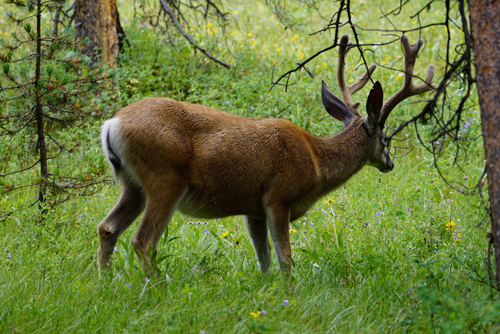
We walked along the shore of Jenny Lake and discovered an elk grazing peacefully in a meadow. I am not sure who go the bigger shock.

Grand Teton National Park is one of the largest intact mid-latitude ecosystems in the world, with an abundance of wild life and wild flowers.

Established in 1872 by the US Congress and signed into law by Ulysses S Grant, Yellowstone was the the first National Park in the US and the world.

Yellowstone is inside a giant caldera and there’s thermal activity at every turn. Steam seems to rise from the most unlikely places.

It was at Mud Volcano that I learnt the difference between roiling and boiling. Although the thermal mud ponds seem to be boiling they only look like that because of the steam that is rising from the fissures below.

This simulated boiling is called roiling.

On our first day in the park we came up from Jackson and drove in a loop. Starting from West Thumb we travelled anti clockwise past Yellowstone Lake, through Hayden Valley to Canyon Village, then through Norris and Madison and back to West Yellowstone.

The weather fluctuated from overcast to rain.

The next day it rained less but the weather was still unreliable.

This time we came from West Yellowstone and made a clockwise loop, on the northern road, past Gibbon Falls to Mammoth Hot Springs, Tower-Roosevelt, past Mount Washburn to Canyon River and the Upper and Lower Falls. We then completed the trip back again through Norris and Madison.

Our circuit took a lot longer than expected, as we were held up with roadworks and an emergency involving a helicopter landing in a car park just in front of us.

From Yellowstone West we drove to Boise, the capitol of Idaho and then on to Portland in Oregon.

We had a coffee break in Idaho Falls a sleepy little place with the Snake River cascading through the centre of town.

The geography in this area of North America is stunning. Rivers raged and there seems to be an endless supply of spectacular scenery around every bend in the road.

Most people in the US seem to finish their meals in about 45 minutes – we take much longer.

This gives us a great opportunity to be spectators of more than one table.

Half the fun of being a traveller is observing life and living in different countries.

The US is a fascinating society and their food a conundrum. The serves are huge and stacked with carbs – fries are a staple. There is no subtlety in the flavors with fresh herbs and spices playing a fleeting role. Yet the choice of sides and extras goes on and on.

There are the Gastro Pubs and fine dining but the average person, when eating out, has a poor quality selection to chose from.

Then there’s what’s been done to Italian cuisine.

Italian has become the ‘World Food’ because it’s simple, easy to prepare, flavorsome and, when eaten properly, well balanced.

In the US these criteria have been abandoned. Their take on Italian has been complicated beyond belief.

The sauce has become so complex and so abundant that the pasta is overwhelmed. The basic Italian herbs of oregano, basil and thyme have all been forgotten – as has garlic and even olive oil.

I won’t even go into what has been done to pizza.

Every restaurant seems to try and out-maneuver the next with their toppings.

Comfort food, with high carbs, high sugar and mega serves seems to be the most acceptable.

Cheese seems to be the main additive on all sorts of food. We even had it on fries from Idaho, the home of potatoes in North America.

Yet try and find a cheese platter for desert and you’ll fail.

There are always the exceptions and we found some great ones. These were mainly associated with the craft brewery scene, where the food was as important as the beer and, surprisingly, the wine.

These establishments were frequented by a younger generation who seem to place quality above quantity.

In Boise, Idaho, I actually witnessed a guy leaving food on his plate.

While we might whinge about the food, most of the hotels and motels we stayed at were excellent. Toilets or ‘bathrooms’ were impeccable, especially compared to some places we have been.

Everything also works.

The water is hot, showers heads spray water on you, not the floor or ceiling, and nothing leaks.

There is soap, shampoo, towels and in most cases a hair dryer in the room. What wasn’t provided was readily available at reception.

Salt Lake City, contradictions at every corner.
(July 2015)

October 24th, 2015

DSC06136

Salt Lake City is home to the Mormons or The Church of Jesus Christ of the Latter Day Saints (LDS)

They own the city.

Founded in 1847 by Brigham Young and a devout group of farming Mormons, they extensively cultivated the once arid valley. Ever since then they have had a profound influence on the place, even though less than half the population of SLC are members of the LDS Church.

It’s a surprisingly modern and progressive city.

There is a tram, all be it on three limited routes, but it’s public transport that’s not powered by a Diesel engine. It’s a relatively new system with the first line being completed in 1999 and the Airport line commencing operations in 2013.

There are also public bikes to rent, again provided by the city.

In SLC you will come across more dark suits, white shirts and subdued ties than you’ll see in an episode of Mad Men.

Yet there is poverty, with street people on every corner of the CBD.

There is also a vast contrast in the architecture with the Mormon temples built in the 1800s to modern glass and steel skyscrapers that are common in the city area.

And there’s the Salt Lake City and County Building, constructed by the Free Masons between 1891 and 1894 and built in open defiance of the dominance of the Mormons. It was the one and only building designed by the architectural firm of Monheim, Bird and Proudfoot. It went grossly over budget and was deemed as an extravagance by the Mormon side of town.

The weather is also varied with blue sky’s one minute and torrential rain the next.

We even received a ‘flash flood’ warning on our US mobile phone.

Then there’s alcohol.

The Mormons abstain from anything that is in the least mind altering – tea, coffee and of course booze.

Yet SLC is full of bars, restaurants and at least three excellent craft breweries.

One very fine establishment was the Red Rock Brewing Company. This Brewpub, located downtown in an old dairy warehouse was full to overflowing. There were 10 craft beers on tap and an excellent menu to choose from.

Obviously the other half of SLC don’t mind a bit of a tipple.

When the Mormon pioneers arrived in the Salt Lake Valley, Brigham Young selected a plot of the desert ground and proclaimed, “Here we will build a temple to our God.”

It took 40 years to build Temple Square with construction starting in 1853. It is now the centre of the city and to many the world wide centre of genealogy.

The Family Search Centre has a number of professional genealogists but is mainly staffed by volunteers.

Elder Kent Nelson spent three hours helping Thea chase ghosts, searching for both her and my ancestors.

The service they offered is excellent and the facility is state-of-the-art, yet we were never pressured to join the faithful or even asked for money.

The cynic in me asks – why?

The answer is ‘Baptism for the Dead’

This is part of the Mormon doctrine and is the practice of baptising a living person on behalf of one who is dead.

This helps to build the number of church followers, even though they may have passed away centuries ago.

I am not sure how a distant relative, from a different faith, might feel about that.

Arches National Park, the Olgas on steroids.
(July 2015)

October 18th, 2015

DSC06053

The drive from Cortez to Moab, on our way to Arches National Park, was an adventure in geography and weather.

The landscape varied from alpine to arid. We went through areas that were hot, with bright blue sky’s, while in the mountains there were monsoonal rains and the temperature plummeted.

Moab is the centre of adventure in this part of America. You can bush-bash, river raft, paddle board, mountain bike, go kayaking and that’s all in addition to visiting the Arches National Park.

In the late afternoon of our first night in Moab we made a quick run around a small section of the park. We were lucky as the light was perfect and only started to fade as we were on our way back to the hotel.

Moab is only 6 km from Arches, which is on the Colorado River in Utah. It was named as a National Monument in 1929 and made a National Park in 1971.

The next day we headed back into the park to experience more of its spectacular beauty.

Our $10 entrance fee was valid for 7 days so we could come and go as much as we liked.

Like the Grand Canyon, Arches National Park was very good value for money. The facilities were impeccable, the roads and tracks were well maintained and the staff knowledgable and extremely friendly.

They do seem to enjoy their job.

When we were in Mesa Verde we met a park ranger, working there for the summer season. Each year he went to a different park and enjoyed learning about the history, geography and geology of the areas he worked in.

It showed in the way he interacted with the park visitors.

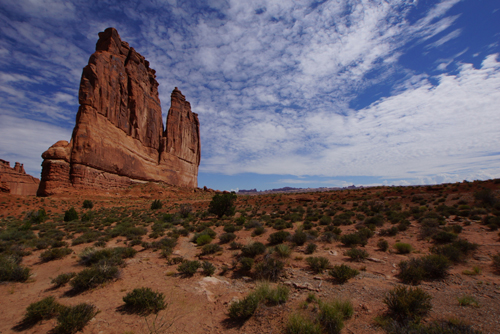
The Arches National Park was a highlight and to my mind and far more spectacular than Monument Valley.

There are similarities with the Olgas in Central Australia, but in the Arches the sites and vistas just seem to keep on reinventing themselves at every turn.

We drove to the end of the park and then did a 9 km walk around the Devils Garden. Passing Tunnel Arch, Pine Tree Arch and Landscape Arch we ended up at Double O Arch.

There was a thunderstorm brewing to the north and it appeared to be coming our way – then it vanished.

It was only a relatively short walk by comparison to some we had done but it was hard going.

We took what’s called the ‘Primitive Trail’ which is only marked with rock cairns and described in the guide book as ‘strenuous’.

The rock formations in Arches National Park are natural sculptures in their most spectacular form. The geology of the formations is complicated with a history that goes back 300 million years, when the area was an ocean. A combination of hard rock, soft rock, pressure and erosion have all contributed to the creation of monoliths, spires, balanced rocks and the famous arches.

Seemingly at odds with the natural wonder of this region is the wastefulness of the tourist industry that supports it.

We very soon became conscious that Americas live with a seemingly bottomless supply of disposable items. Apart from the coffee chains, that serve everything in a paper cups, most breakfast venues, including hotels and motels, seem to only use disposable plates, cutlery and cups. This wastage is also carried through to the food. If you need some milk for your cereal you are forced to use a carton containing half a pint, when you really only need a small portion of that amount.

Nothing is recycled and everything seems destined for landfill.

Happy Fourth. (July 2015)

September 19th, 2015

DSC06760

Cortez was our base for visiting Mesa Verde and also where we were on the Fourth of July, one of America’s favourite holidays.

Cortez is the largest town in Montezuma County, being first established in 1886 to house laborers for the Dolores River diversion project. The damming of the river allowed farmers to use the water for irrigation.

On the Fourth we decided to drive 70km to Durango, as there seemed to be more celebrations there.

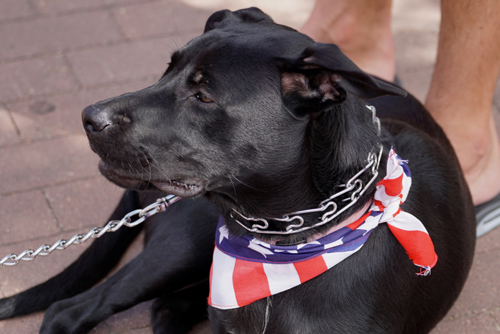
We weren’t disappointed, as the town was full of locals, and tourists, many dressed in red, white and blue or sporting flags and bunting on their vehicles.

There was also a large group of Harley riding bikers. These aren’t the outlaw motorcycle gangs that we hear so much about, but mature men and women who are out for a days ride in the country.

In 2014 there were nearly 500,000 new bikes registered in the US, with Harley Davidson having a huge market share of over 36%.

Durango is an old mining town, founded in 1880 by the Denver and Rio Grande Railway Company. The tracks from Durango to Silverton were completed in 1882 and is still operating today, unlike the tramcar, that once ran up and down Main Avenue.

This has been sadly replaced by diesel powered facsimile.

The town sits at the base of the Animas City Mountain and is a thriving tourist village that’s home to both winter and summer activities. There are ski fields nearby, as well as whitewater rafting, Ziplining and water sports on Lake Nighthorse.

Back in Cortez we caught a glimpse of the celebratory fireworks. We thought that they would be all over in a few minutes but they went on and on.

For a small town Cortez put on a great show for the fourth.

Prehistoric America in Mesa Verde National Park. (July 2015)

August 23rd, 2015

DSC05984

About 16km from Cortez is the Mesa Verde National Park. This is one of the areas in Colorado that has well preserved buildings and artifacts from the Pueblo Indians. This prehistoric civilisation preceded the Navaho and were in this area 3,000 to 5,000 years ago. However it was first inhabited by Paleo-Indians around 9,500 BC.

The Mesa Verde or Green Table in Spanish, describes the plateau where these ancient civilisations live their semi nomadic lifestyle.

The National Park was created by president Theodore Roosevelt in 1906 and is also a UNESCO World Heritage Site. It’s 21,240 ha in area, with 4,000 sites and 600 cliff dwellings.

Montezuma Valley was home to 35,000 Ancestral Puebloan people during the 1200s. The development of the Pueblos or houses took place over many centuries. Starting with pit houses and culminating in the brick built cave dwellings – these brick houses are the main attraction of Mesa Verde.

The Puebloans used an atlati, a form of throwing stick, similar to the woomera of the Australian Aboriginals. They subsequently went on to develop the bow and arrow and learnt how to crop, domesticate animals and make pottery.

It’s amazing the difference a ready supply of wild fruit, vegetables and animals had in their development. That, combined with the contact the Puebloans had with more advanced civilisations from the south, led to them developing a rich diverse culture.

The modern day Hopi and Jumi Indians are the ancestors of the Puebloans.

We travelled along Chapin Mesa, which with the Wetherill Mesa are the two main inhabited areas.

The Chapin Mesa Archeological Museum has a number of excellent dioramas detailing the history of the Ancestral Pueblo people. It also contains fine examples of their basket weaving and geometric pottery in black and grey. There were also many stylised animal motifs that are widely used by the locals today – especially in marketing their adventure tours and accommodation.

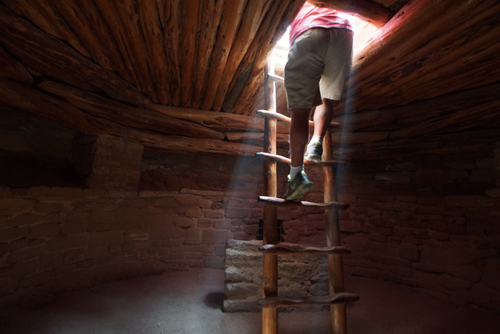
Our park ticket allowed us to visit Spruce Tree House. This is one of the best preserved cliff dwellings on the Mesa Verde. It shows how the Ancestral Indians built brick ‘apartment blocks’ within the caves below the the Mesa.

These housed many families and were part of a community building program that included the Square House, which has a tall tower of five floors.

We also visited Sun Point View, Cliff Palace View and Cliff Canyon Overlook.

On our second night in Cortez we had dinner at the Main Street Brewery. We had a drink there the night before and I found their craft brews exceptional.

Their food wasn’t shabby either.

It had been suggested to us that because the serves are so large in the US, the best strategy is to share the main course, or entrées, as they are known.

We shared the Smoked Ribs and there was more than enough for two.

Monument Valley, the wild west as we know it. (July 2015)

August 5th, 2015

DSC06675

We stayed overnight in Kayenta, which is on the 30,000 acre Navajo Tribal Park and part of the Navajo Reservation. This reservation is the largest in the USA, and covers 16 million acres.

This was the starting point of our Monument Valley drive.

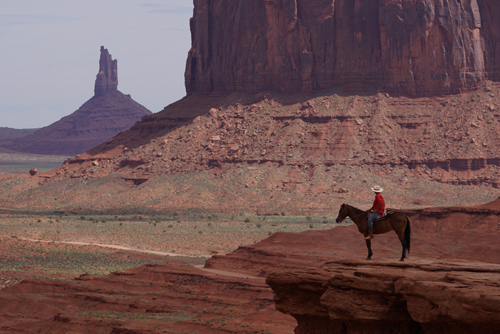
Monument Valley is the archetypical American west, as depicted in many Cowboy and Indian  movies since the 1930s. John Ford movies such as ‘Stagecoach’, 1939 and ‘The Searchers’, 1956. Then there’s the 1969 road-trip cult classic ‘Easy Rider’.

The next morning we drove to Goulding’s Lodge where we picked up an off-road tour to visit the valley.

There are 17 miles of unpaved roads that aren’t accessible with an ordinary car. However I did see a number of sedans, including a convertible Mustang driving along the track.

The tour did take us to some areas that are within Indian private land. This exclusivity was somewhat diminished when our driver/guide had to reprimand some French tourists for trespassing.

Within one such area we were shown some 1,500 year old Petroglyphs.

In the afternoon we drove to Cortez in Colorado, with a slight detour to Four Corners. There are plaques in each state

This is a completely man made attraction, originally established in 1899, that celebrates the border convergence of four states – Colorado, Utah, New Mexico and Arizona.

In many ways this is a totally underwhelming experience, but one you have to do if you are in the area.

There is even controversy as to whether the location of Four Corners is geographically accurate.

It’s also a money spinner for the local Navajo as they charge $5 per person for tourists to stand astride four states and have their photo taken doing it.

The Grand Canyon – what the Colorado River carved out of Arizona. (June/July 2105)

August 4th, 2015

DSC05853

On the road from Phoenix to the Grand Canyon we detoured to Flagstaff and the Red Rock Ranger District, of the Coconino National Forest.

These high escarpments truly are red, especially in contrast to the bright blue sky.

On arrival at the Grand Canyon entrance we were greeted by uniformed staff, complete with ‘Smokey the Bear’ hats.

The Grand Canyon certainly is grand, measuring 446 km long, 29 km wide and 1,857 meters deep. Two billion years of geological history have been revealed as the mighty Colorado carved its way through this part of Arizona.

President Theodore Roosevelt championed the conservation of the canyon but it wasn’t until 1919 that President Woodrow Wilson had it made a National Park.

At 6:30am on our first morning, there was a large brown, very bare looking tree moving outside our cabin window.

It turned out to be an Elk that was grazing on a fir tree.

When you enter the Grand Canyon National Park each vehicle pays $30. This allows you to come and go for one week.

We were staying in the park and only going to be there for one full day but it was still great value.

There is a shuttle bus service, on three routes, that runs around the south rim.

The red route goes as far west as Hermits Rest, while the orange goes east to Yaki Point. The blue route links the Visitors Centre with the Village and the train depot.

We travelled east and west on the south rim, using a combination of shuttle buses and walking.

The Grand View Lookout is where most of the tour groups go. It’s close to the road and easily accessible to most tourists. It has some good views but is also one of the most crowded places on the southern rim.

We moved on quickly.

The Californian Condor, extinct in the wild in 1987, was reintroduced into the Grand Canyon, Zion National Park, parts of California and Baja California in Mexico.

This is one of the world’s rarest birds and at last count, in 2014, there were only 425 living wild or in captivity.

Adults have a wingspan of 3m and they can live up to 60 years.

We were lucky enough to see two sitting on a ledge.

On our first night we ate at the El Tovar Hotel and got chatting to our waiter.

I was interested as to how waiters earn a crust in the US.

We had been told that ‘wait staff’ or ‘servers’, as they are known barely earn enough to survive on, so tips make a huge difference.

What we didn’t know was that the lead waiter shares his/her tips with other wait staff and people in the kitchen.

No wonder they are so pleasant and little wonder that the minimum tip starts at 18%.

On our last morning we dropped into some viewing spots to the east of where we were staying. The Desert View Watch Tower was one of the most interesting.

Built in 1939, it was designed by Mary Coulter (1869-1958). Ms Coulter was a rare breed, being one of the few female architects of her time.

She did much of her work in the Grand Canyon National Park for the Fred Harvey Company, with its origins dating back to 1875, Fred Harvey built hotels and restaurants along the the rail routes in the western United States.

Route 66, Peebles and Taliesin West. (June 2015)

July 15th, 2015

DSC05742

After the glitz of Vegas we headed south to Arizona.

Just out of Las Vegas we stopped at the Lake Mead Lookout and got our first glimpse of the mighty Colorado River.

This is one of the principal rivers in the South Western United States, running for 2,330 km and taking water from seven US and two Mexican states.

It’s also the principal architect of the Grand canyon.

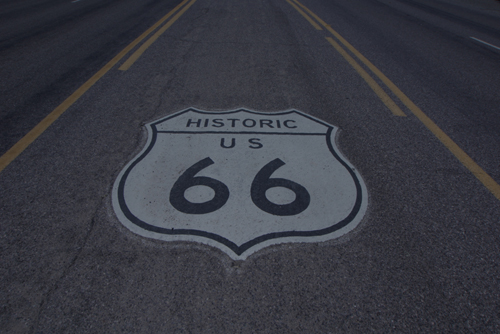
We detoured via Kingman to travel on the ‘Mother Road’ or Route 66. Unfortunately this wasn’t in a Chevy Corvette, Ford Mustang or even on a Harley Davidson but a rather slothful Nissan Versa.

It’s not the road that it used to be, as the Interstate Highway System replaced it or it has been buried under development.

It was originally created in 1926 and was a major route from Chicago to California and has been imortalised in songs and on TV.

That night we spent a very pleasant time in Peeples Valley with Thea’s friend Ruby – she even cooked us a turkey roast.

The next day the three of us visited Taliesin West. This was Frank Lloyd Wright’s Architectural school and winter house in Scottsdale, Arizona.

It was built in 1936 and is the current home of the Frank Lloyd Wright Foundation and sister school to Taliesin in Wisconsin.

Built, using local materials in the Organic Style, this property almost hugs the earth with its low profile design of timber and rock.

I felt that the layout was disparate and lacked the visual cohesion of his other houses. Well the ones I have seen so far.

Wright not only designed the building but all the furniture and light fittings.

Navaho Red was his favourite colour and there were splashes of it everywhere.

The only way to visit Taliesin West is by guided tour. This was conducted by a very knowledgable but rather effusive retired teacher.

His views were very blinkered as to the genius of Frank Lloyd Wright, especially in comparison to European architecture.

To his credit he tried to imbue a sense of the aesthetic for architecture into the group, but I found his approach rather condescending.

Las Vegas – Sin City. (June 2015)

July 5th, 2015

DSC05716

Another long flight and we were back in LA.

We picked up a hire car and drove to Long Beach. Ian had maps all marked with sticky notes of places we just had to visit. I think it would take us six months rather than two to cover all his suggestions.

We then had to work out just what we could see in the time.

So after a four hour drive from LA, Las Vegas was our first stop.

This is glitz on steroids.

Everything was big and we weren’t even in Texas.

Our hotel, the Stratosphere, had checked in over 500 guests by the time we arrived.

And even more were waiting at the reception desk. Then there’s a staff of around 1,200 to service the patrons and 2,472 rooms to house them.

The Stratosphere is at the northern end of the Strip and we decided to walk down to the main casino area.

This was a mistake as the temperature was hovering around 43°C.

After walking in the heat for an hour or so we escaped into one of the many, air conditioned, shopping malls.

This one was called Fashion Show Mall and they have a catwalk fashion show every half hour.

After a cool drink and a rest we ventured out again and it wasn’t long before we found Caesars Palace.

Originally built in 1966 this massive hotel, resort and casino has 3,960 rooms. It’s Roman theme runs throughout every aspect of the design, with the shopping complex replicating a Roman forum. The temperature is set to a mild 23°C and the domed ceiling is a painting with white fluffy clouds on a blue sky and lit to have a late afternoon glow.

The punters are always comfortable at Caesars Palace, no matter if they are gambling, shopping, eating or just browsing.

Apart from Caesars, Las Vegas is full of themed venues.

There’s the Venetian, Luxor, Caribbean, Paris, Planet Hollywood, MGM Grand, New York, New York and Circus Circus.

And the list goes on.

The latest resort-hotel-casino extravaganza is going to have an Asian theme.

The justification for the Eastern influence is that 75% of the high rollers come from that part of the world.

Our hotel, the Stratosphere, was all about height.

The tower is the highest building in Vegas, standing at 350.2m. In fact it’s the tallest freestanding observation tower in the Unites States and is topped with vertigo inducing rides and activities.

The ultimate adventure for the thrill-seeker is a controlled free fall of 252m from the top of the tower.

On our second morning we had a quick drive down to Fremont, the original gambling centre of Las Vegas.

This areas has a lot of the old fifties charm and a vibrant night life. It’s just a single street that has now been covered with a large, LED lit canopy.

This offers a shaded area in the heat and shelter if it rains – which I doubt it ever does in Nevada.

Bail bonds, attorneys and pawn shops are everywhere, especially in Fremont. This is the lucky city but there are still many people who are down on their luck.

We again availed ourselves of the Hop-On Hop-Off Bus.

This one had two routes – The Strip and Down Town. The temperature was again in the forties but the top level of the bus offered some shade and a cool breeze – so long as the bus kept moving.

We had wondered why there were no Seniors discounts in Las vegas. Brian, our guide on the ‘Strip Route’ had the answer. Seniors represent the largest market in Vegas and it would be stupid to offer them discounts, as they will spend anyway. What Brian did say is that that industry see families with young children as their growth area and for that reason kids, under 12, get everything gratis.

The ‘Welcome to Las Vegas’ sign is another icon of the US, much like the ‘Hollywood’ one in LA. The big difference is that the Vegas sign is copyright free. It was designed by Betty Willis, in the Googie style and built in 1959.

This means everyone can copy it, and they do – rip offs are everywhere.

Las Vegas is Sin City, in many ways beyond gambling. Our hotel offered a happy hour between 2am and 4am, where there were two for one drinks. Smoking is permitted, as are children, in any of the casino areas.

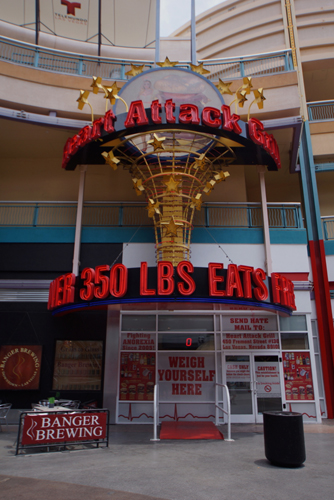
There is even a restaurant in Fremont Street that celebrates their 350 Pound (158.75kg) plus patrons, encouraging them to eat more and not to worry about their life threatening conditions.

Once they weigh-in on the industrial strength scales outside, they get to eat free.

There is an accompanying ‘Hate’ mailbox where you can send your letters of objection.

That’s if you are a ‘self opinionated, sticky nosed, do-gooder’ from San Francisco or LA.

Back to Melbourne for ‘The Event’ (June 2015)

July 2nd, 2015

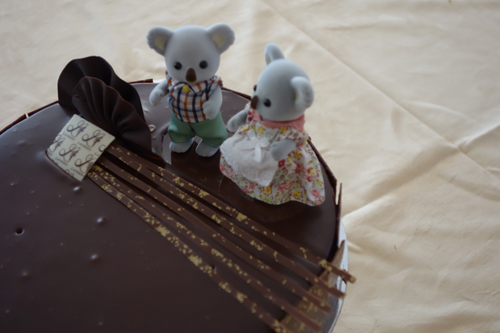
The Sunday wedding cake with Sylvania koalas

While we were in Belize our son Evan informed us that he and Stephanie were going to get married.

While this was a surprise it wasn’t altogether a shock.

They wondered if we could come home for ‘The Event’, as it became known.

We immediately booked a flight from LA to Melbourne.

This was a whirlwind visit, in more ways than one.

It turned out to be not just one event but two. The actual wedding ceremony on Tuesday night, followed by a party the following Saturday night.

There were only twelve of us for the ceremony, plus the civil celebrant, Jenny Bahramis, a long time family friend.

The party on Saturday was at the Hares and Hyenas in Brunswick.

This gay and lesbian bookstore also doubles as a venue and was an ideal location for the second event.

Both of these events were fun, creative and unique, a lot like Ev and Steph.

The main events were dispersed with a number of smaller events.

All in all it was a very hectic time and we fell back onto the plane, ten days later, completely exhausted but very happy – especially for Evan and Stephanie.